

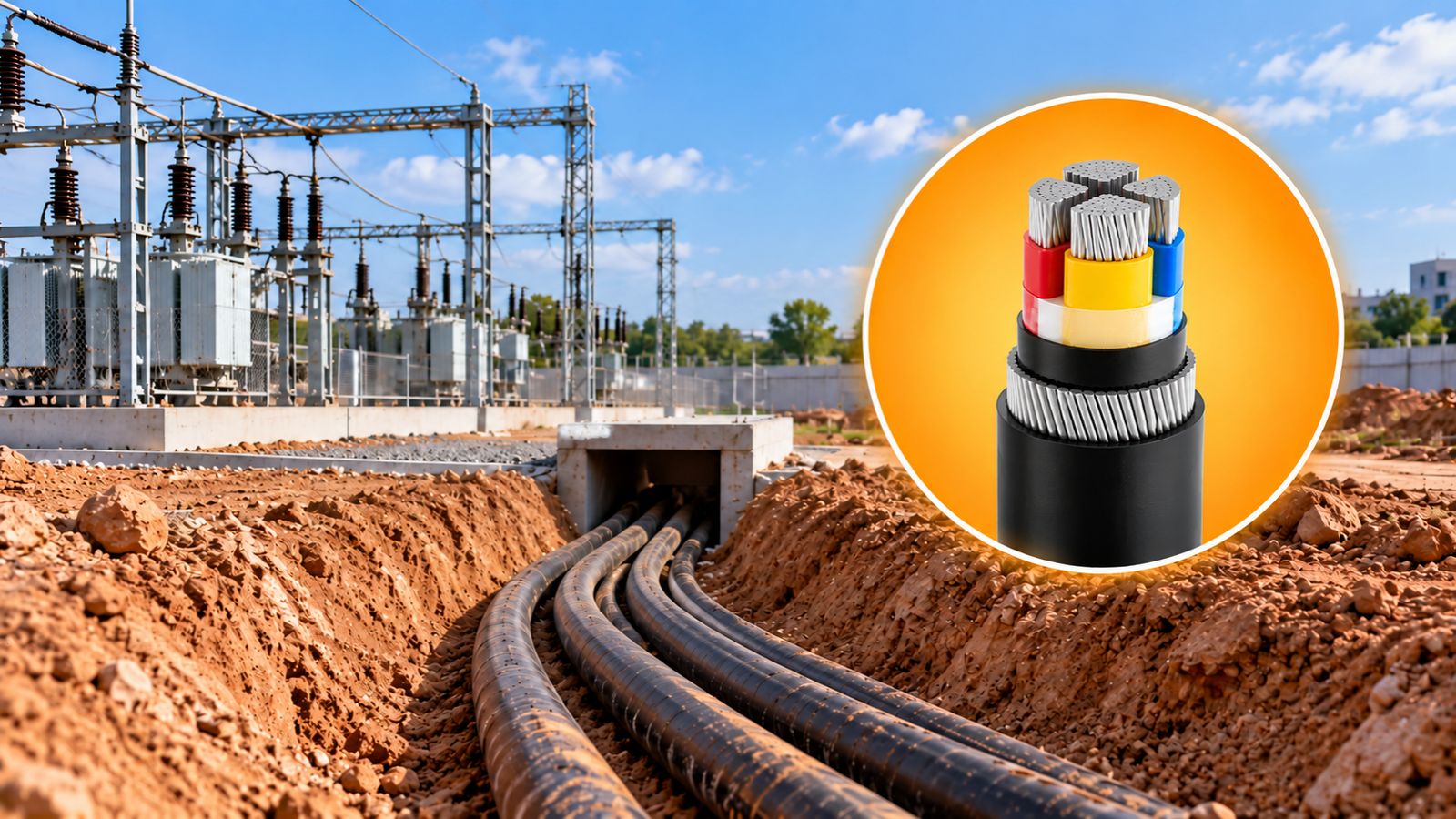
Most low voltage circuits in homes, offices, shops and small factories never see extreme loads or high heat. For these jobs, buyers want a cable that does the work reliably, survives underground conditions and keeps project costs under control. PVC LT underground cables meet that need on countless projects across India. Choosing the right one still means understanding its construction, ratings and limits before you place an order.
This guide explains how a PVC LT underground cable is built, what its ratings mean, where it performs best and what to check before buying. It draws on the published specifications of the Prem Cables PVC LT range.
A PVC LT underground cable is a low voltage power cable with PVC (polyvinyl chloride) insulation, designed for burial, ducts and trenches. "LT" stands for low tension, which covers circuits up to 1.1 kV.
Prem Cables manufactures its PVC LT underground cables for low voltage power distribution up to 1.1 kV. The range comes in single core and multicore armoured versions for residential, commercial and industrial installations.
A PVC armoured cable uses several layers, and each one has a clear job.
The conductor carries the current. Prem Cables offers aluminium or copper conductors, in solid or stranded form, as per IS 8130. Stranded conductors bend more easily, which simplifies routing and jointing on site. Aluminium keeps the cable lighter and easier to handle on long trench runs, while copper gives a smaller cable for the same current. Choose the material that your project specification and budget call for.
Each core carries PVC insulation of Type A or Type C, as per IS 5831. This insulation gives stable dielectric strength across the cable's working temperature range. Coloured cores help electricians identify phases and neutral during termination.
An extruded PVC inner sheath binds the insulated cores together. It also forms a smooth, even bed for the armour layer above it.
The armour protects the cores from crushing, digging tools and other mechanical damage after burial. Multicore cables use galvanised steel strip or wire armour. Single core cables use aluminium armour instead.
The outer sheath uses PVC-ST1 or ST2 compound, with a flame-retardant option for locations where fire safety matters. The sheath resists most oils, chemicals and water, which makes the cable suitable for direct burial and duct installations.
Prem Cables publishes these ratings for its PVC LT range. Each one answers a design question.
Prem Cables manufactures PVC LT cables from 4 sq.mm to 500 sq.mm, with overall diameters from 10.5 mm to 74 mm. Typical current ratings range from 50 A to 850 A, and short-circuit ratings go up to 47.2 kA.
These figures depend on how and where you lay the cable. A cable buried directly in the ground, one in a duct and one on a tray will each carry a different safe current. Grouping several cables together, high soil temperature and deep burial all reduce the rating further. Your designer should apply the correct derating factors for each run before fixing the size.
Voltage drop matters too, especially on long feeders. A cable that carries the current safely may still cause too much voltage drop at the far end. Check both conditions before you finalise the size.
Prem Cables lists these applications for its PVC LT range:
These cables suit circuits where loads stay within the cable's rating and ambient temperatures stay moderate. Residential colonies, office complexes, small and medium factories, and utility service connections all fall into this group.
Cost plays a big role too. Prem Cables designs its PVC range for economical low voltage networks without compromising on durability. For many projects, that balance makes PVC armoured cable the practical default for underground LT runs. Our post on why low tension aluminium cables are in high demand across industries explores this wider demand.
Prem Cables lists three standards for its PVC LT range:
For Indian projects, IS 1554 Part 1 is the primary reference. Name it in your purchase order and ask for routine test certificates against it for every drum.
Good installation protects the cable for its whole life. A few simple steps make a big difference.
Prepare the trench properly. Lay the cable on a bed of soft soil or sand, free of stones and sharp debris. Cover it with the same material before backfilling.
Respect the bending radius. Keep every bend at or above 12 times the cable diameter. Tight bends can crack the insulation or distort the armour.
Pull with care. Use cable rollers in the trench and at corners, so the outer sheath does not drag on rough ground. Avoid sudden jerks that stretch the conductor.
Seal the ends. Cap cut ends until termination, so moisture cannot enter the cable.
Earth the armour. Bond the armour at terminations as the design and local rules require.
For a fuller site checklist, read our guide to LT power cable installation practices for safe and reliable performance.
Run through this list with your supplier:
A clear order makes bids easy to compare and avoids surprises when the drums reach site. For buyers planning commercial projects, our article on low tension aluminium cables for commercial and infrastructure projects offers further guidance.
Prem Cables has manufactured power products since 1964, starting at Pipalia Kalan in Rajasthan. Its PVC LT range reflects that long experience with low voltage distribution.
The company runs ISO 9001:2015 certified processes and an in-house testing laboratory. For contractors, builders and utilities, that means tested, documented cables and consistent quality across large orders.
PVC LT underground cables offer reliable, economical power distribution up to 1.1 kV for homes, offices, factories and utility networks. Their armoured construction protects them underground, and their sheath resists oils, chemicals and water. Buyers who match the size to the load, apply the right derating and confirm IS 1554 Part 1 compliance get cables that last.
Review the full Prem Cables PVC LT specifications, then contact the Prem Cables team to discuss sizes, armour options and technical documents for your next project.
It is a low voltage power cable with PVC insulation and armour, designed for burial, ducts and trenches in circuits up to 1.1 kV.
PVC LT cables carry a voltage rating of 1.1 kV AC.
Prem Cables rates its PVC LT cables for –15 °C to +70 °C in operation and up to 160 °C during a short circuit.
IS 1554 Part 1 covers PVC insulated cables for working voltages up to 1.1 kV.
Prem Cables offers PVC LT cables from 4 sq.mm to 500 sq.mm, with overall diameters from 10.5 mm to 74 mm.
Prem Cables specifies a minimum bending radius of 12 times the overall cable diameter.
Yes. Armoured PVC LT cables suit direct burial, cable trenches and duct banks, and their sheath resists most oils, chemicals and water.
Multicore PVC LT cables use galvanised steel strip or wire armour, while single core cables use aluminium armour.


