
.png)
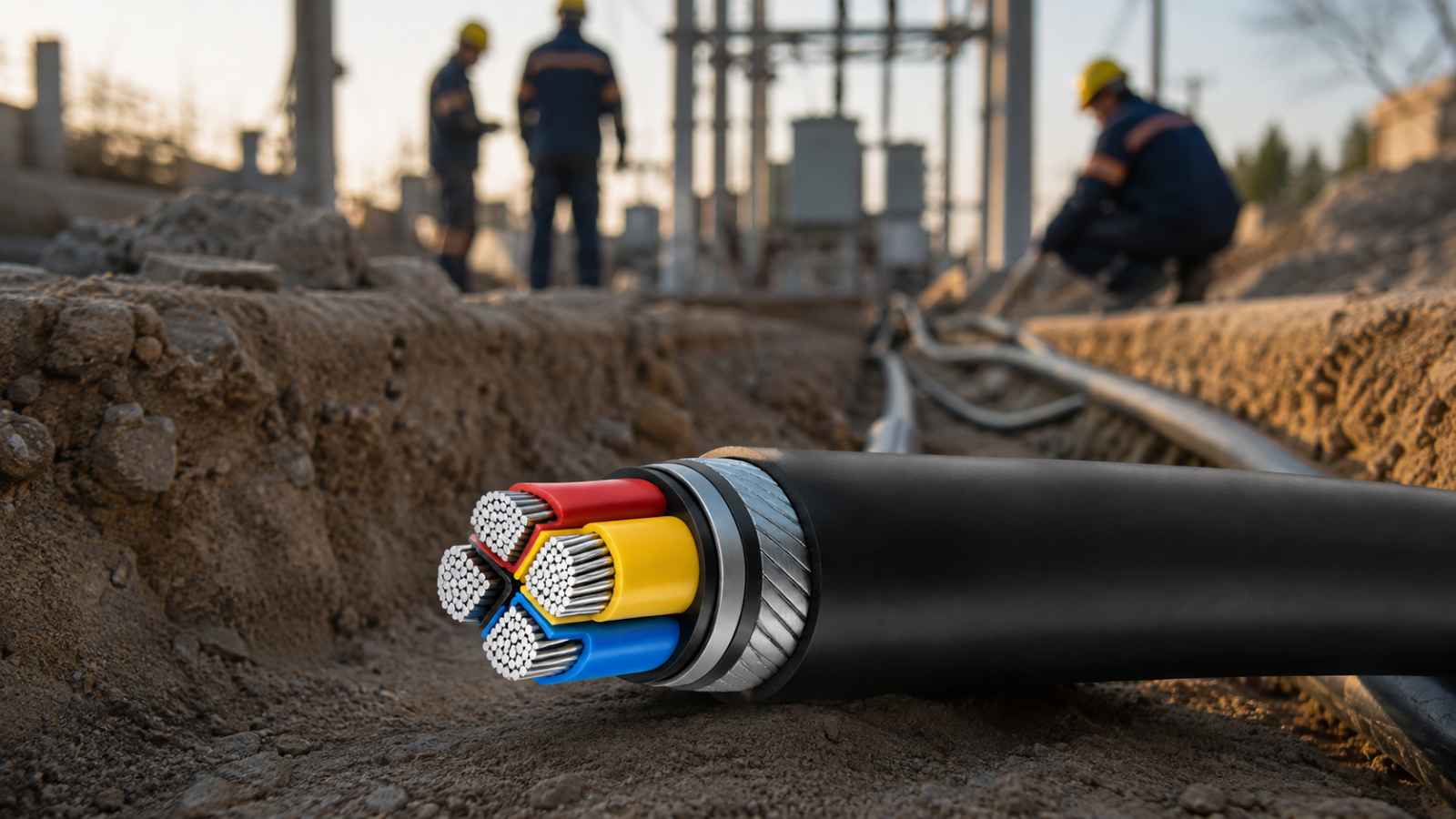
A cable rated to last forty years can fail within its first winter if it goes into the ground the wrong way. That gap between design life and real-world outcome comes down almost entirely to installation quality. Correct LT power cable installation practices protect every bit of engineering that went into manufacturing the cable in the first place, and skipping them turns a premium product into a liability buried where nobody can see the mistake until it trips a breaker. At Prem Cables, we manufacture the cable, but we also spend a fair amount of time reminding contractors that laying it right matters just as much as making it right.
A damaged conductor rarely fails on day one. It sags, cracks, or overheats months or years later, usually during the exact moment a facility needs power most reliably. Tracing that failure back to a bad bend radius or a shallow trench dug during construction becomes expensive once the cable is already covered and the contractor has moved to the next site.
Insurance claims, downtime penalties, and emergency excavation work all cost far more than the few extra hours proper installation would have taken. This is true whether the project sits in an industrial park outside Chennai or a commercial tower under construction in Dubai, since the physics of cable stress does not change with geography.
Prem Cables designs its LT power cables to handle demanding electrical loads, but no manufacturing tolerance can compensate for a cable pulled too fast around a tight corner or dropped into a trench without proper bedding material underneath.
Trench depth sits at the top of any serious set of LT cable laying guidelines, since burying a cable too shallow exposes it to mechanical damage from future digging, vehicle loads, or ground movement. Most low tension installations require a minimum depth that accounts for both the cable's own protection and the likelihood of future excavation nearby.
Bedding material matters just as much as depth. A layer of sand beneath and around the cable, followed by protective tiles or a warning mesh above, cushions the cable from sharp stones and signals its presence to anyone digging later. Skipping this step is one of the most common reasons cables get accidentally sliced during unrelated construction work.
Spacing between parallel cable runs also deserves attention, particularly when multiple circuits share the same trench. Cables laid too close together generate combined heat that neither cable was individually rated to dissipate, gradually reducing their effective current-carrying capacity below what the datasheet promises.
XLPE insulation offers excellent thermal and mechanical properties, but only if the cable avoids unnecessary stress during the pulling process itself. Following basic XLPE cable installation tips at this stage prevents damage that often stays invisible until the cable is energized and already buried.
Bend radius restrictions exist for a reason. Pulling a cable around a corner tighter than its rated minimum bend radius can crack the insulation internally without leaving any visible mark on the outer sheath. Site teams should always check the manufacturer's specified minimum radius, generally a multiple of the cable's overall diameter, before routing it through ducts or around structural obstacles.
Pulling tension also needs monitoring throughout installation. Excessive force applied to drag a cable through a long conduit run can stretch the conductor and stress the insulation layer, particularly on longer pulls common in large industrial or commercial projects. Prem Cables manufactures LT power cables with XLPE insulation rated for 90°C continuous operation, but that thermal rating assumes the insulation reaches site undamaged from the pulling process itself.
Cables rarely fail in isolation from their surrounding environment. Safe cable installation practices account for what sits near the cable route just as much as the cable's own specifications, since proximity to heat sources or chemical exposure can degrade insulation over time even when the cable itself was installed correctly.
Routing cables away from boilers, steam lines, or direct exposure to prolonged sunlight during exposed runs protects the XLPE insulation from accelerated ageing. When a cable route absolutely must pass near a heat source, additional heat shielding or a wider clearance gap becomes necessary to keep the insulation within its rated temperature range.
Industrial sites in the Gulf region, where ambient ground temperatures run higher than in temperate climates, benefit especially from careful route planning around heat sources. Prem Cables offers FRLS and LSZH sheath variants for installations where fire safety adds another layer of consideration, particularly in enclosed spaces common to commercial basements and industrial cable galleries across markets from India to the United States.
Visual inspection after laying tells an installer very little about whether the cable survived the process undamaged. Insulation resistance testing and continuity checks after installation catch problems like moisture ingress or internal insulation cracking before the cable gets energized and put into service.
This testing step matters most on larger projects where a single damaged section, buried among hundreds of meters of otherwise sound cable, could go unnoticed for months. Contractors working on multi-building developments or industrial estates benefit from testing each section individually rather than relying on a single continuity check across the entire run.
Prem Cables supports this quality chain from the manufacturing side by testing every batch for conductivity, mechanical strength, and dielectric performance before dispatch, giving installation teams a verified starting point before their own site testing begins.
Good installation practices only protect a cable that was correctly specified for the job in the first place. Choosing between armoured and unarmoured variants, confirming the right current rating for expected load, and matching insulation type to the installation environment all happen before the first trench gets dug.
Our LT power cables page details the full specification range, including current ratings from 55 A to 1,013 A and sizes from 4 sq.mm to 1000 sq.mm, so engineers can match the cable to their project before installation planning begins. Projects requiring underground distribution across an industrial estate can also review our PVC LT underground cables for buried installations with additional mechanical protection needs.
Contractors and project engineers preparing to start their next LT cable installation can connect with our technical team for guidance on specification selection before work begins on site.
Read more: For a closer look at how LT power cables serve large-scale developments, read our earlier post on why industrial parks are driving demand for LT power cables.
Correct trench depth, proper bedding material, adequate spacing between parallel cables, and respecting minimum bend radius all count among the essential LT power cable installation practices. Prem Cables recommends following each step carefully to protect the cable's rated performance.
LT cable laying guidelines generally call for burying cables deep enough to avoid mechanical damage from future digging or vehicle loads, with sand bedding and protective tiles placed above the cable for added safety.
Bending an XLPE cable tighter than its rated minimum radius can crack the insulation internally without visible external damage. Following proper XLPE cable installation tips prevents this hidden failure mode.
Safe cable installation practices include routing cables away from boilers, steam lines, and prolonged direct sunlight, since heat exposure gradually degrades XLPE insulation even when installation itself was done correctly.
Yes. Prem Cables tests every LT power cable batch for conductivity, mechanical strength, and dielectric performance before dispatch, giving installation teams a reliable starting point for site-level testing.
Post-installation testing catches damage introduced during handling or laying, such as moisture ingress or insulation cracking, which visual inspection alone cannot detect.
Yes. Prem Cables manufactures LT power cables with XLPE insulation rated for 90°C continuous operation, suitable for high ambient temperature regions including Gulf markets like the UAE.
Contractors and engineers can contact the Prem Cables technical team directly through the company website to discuss cable specification and installation planning before work begins.


