
.png)
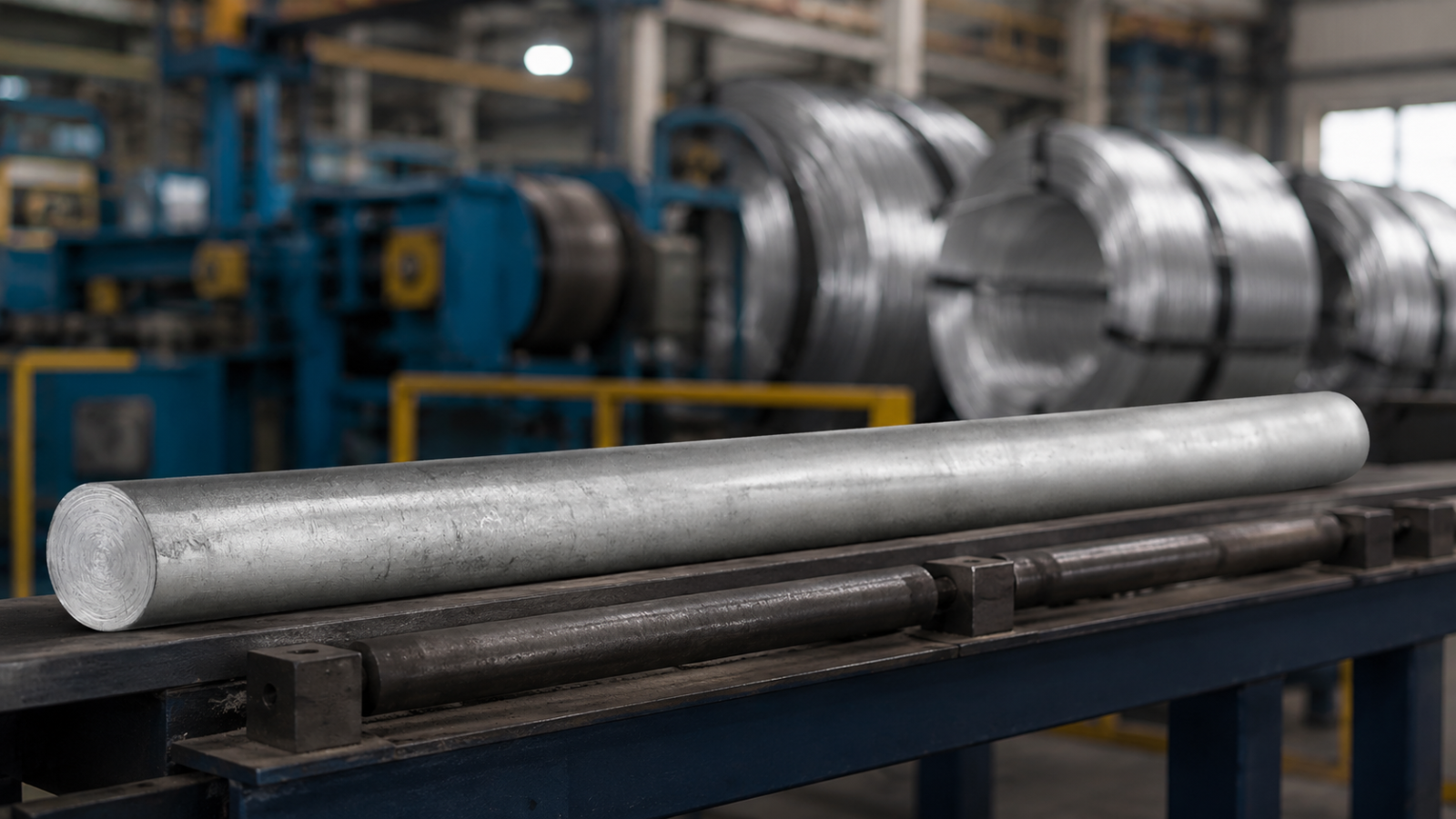
A conductor manufacturer rarely gets a second chance to catch a bad batch of raw material. Once a wire rod gets drawn into strands and stranded into a finished conductor, tracing a defect back to its source becomes expensive and time consuming. This is exactly why aluminium wire rod quality parameters get scrutinized so closely before the rod ever leaves the supplier's facility. At Prem Cables, we build this scrutiny into our own production line, since we manufacture both the rod and the finished conductor under one roof.
This blog walks through the specific parameters conductor manufacturers check before accepting a wire rod shipment, and how Prem Cables verifies each one before dispatch.
A single defective coil of wire rod can compromise thousands of meters of finished conductor before anyone notices. Since conductor stranding combines multiple wire strands drawn from the rod, one substandard coil mixed into a production run creates inconsistency that shows up unpredictably across the finished product.
This risk pushes serious conductor manufacturers toward strict incoming inspection protocols rather than trusting a supplier's paperwork alone. Utilities placing large orders, whether for a transmission project in Maharashtra or an infrastructure tender in the Gulf, expect their conductor supplier to have already screened out weak raw material long before assembly begins.
Prem Cables removes much of this risk at the source, since our rod production and conductor manufacturing happen within the same integrated facility in Pipalia Kalan, Rajasthan. This setup lets us apply consistent quality checkpoints across both stages rather than relying on inspection at a single handoff point.
Electrical conductivity sits at the top of any serious quality checklist, since it directly determines how efficiently the finished conductor will carry current. Even a small drop in conductivity compounds across long transmission spans, translating into real energy loss over the conductor's operational life.
International buyers commonly reference IACS, the International Annealed Copper Standard, when specifying minimum conductivity requirements. Prem Cables manufactures EC grade wire rod with a minimum conductivity of 61% IACS, a benchmark widely recognized by cable manufacturers across markets including the United States and the broader Middle East.
Conductivity testing happens at multiple points during our production process rather than only at the final stage. This approach catches deviations early, before an entire batch of rod moves further down the line toward drawing and stranding.
Electrical performance alone does not make a good conductor. Mechanical strength determines whether the finished product survives installation, stringing tension, and years of wind and weather exposure without failure. Wire rod tensile strength testing verifies this mechanical capability before the rod moves into further processing.
Tensile strength requirements vary depending on the intended conductor application. Standard EC grade rod supports typical distribution conductors, while alloy grades like AL59, 6101, and 6201 deliver the higher tensile strength needed for long-span transmission projects or coastal installations facing constant environmental stress.
Prem Cables tests tensile strength on sample coils drawn from every production batch, checking that results fall within the specification range required for the intended conductor grade. This step matters especially for alloy rods, since even minor deviations in the magnesium-silicon ratio can shift tensile performance outside acceptable limits.
Impurities introduced during melting can quietly undermine both conductivity and mechanical performance without leaving any obvious visual sign. A thorough wire rod purity check screens for trace elements like iron and silicon that, even in small concentrations, measurably reduce a rod's electrical performance.
High-purity aluminium ingots form the starting point for this quality chain. Prem Cables sources carefully controlled raw material before alloying begins, since no amount of downstream processing can fully compensate for impure starting metal.
Spectrographic analysis allows our quality team to verify elemental composition accurately before a batch proceeds to casting. This purity verification becomes especially important for alloy grades like AL59, where the precise magnesium and silicon content directly shapes the final conductor's balance of strength and conductivity.
Dimensional accuracy plays a supporting but essential role in overall conductor grade wire rod quality. Uneven rod diameter creates inconsistent drawing behavior downstream, which can introduce localized resistance variation once the material becomes finished wire.
Prem Cables maintain diameter tolerances within ±0.5 mm across our 7.6 mm to 15 mm rod range, checked through in-line measurement systems during the rolling process rather than only at final inspection. This continuous monitoring catches drift in real time, allowing production adjustments before an entire coil falls outside specification.
Surface finish also gets evaluated alongside diameter, since surface defects like scratches or oxidation spots can affect wire drawing performance and introduce weak points in the finished strand.
Documentation matters as much as the testing itself, particularly for buyers who need to satisfy their own quality audits or export compliance requirements. Prem Cables issues test certificates covering conductivity, tensile strength, and dimensional accuracy with every dispatch, giving conductor manufacturers a verifiable paper trail alongside the physical product.
This documentation becomes especially valuable for export orders, since international buyers across markets like Dubai and other fast-growing infrastructure hubs often require certified test data before releasing payment or clearing shipments through customs. Our ISO 9001:2015 certification supports this documentation trail with a structured quality management framework recognized well beyond Indian borders.
For conductor manufacturers evaluating rod suppliers, this level of documented consistency often matters more than price alone, since a single non-compliant batch can delay an entire production run far longer than any cost saved on cheaper, less-verified material.
Choosing the right wire rod grade depends heavily on the conductor type being manufactured downstream. Standard EC grade rod suits typical AAC and ACSR conductor production, while alloy grades support specialized applications requiring extra strength or corrosion resistance.
Our aluminium wire rods page details the complete range of EC grade and alloy options, including the specific conductivity and tensile benchmarks each grade meets. Manufacturers producing finished conductors from this rod can also explore our ACSR conductor range to see how consistent rod quality translates into reliable finished product performance.
As global demand for dependable conductor manufacturing continues rising, the raw material feeding that production needs matching reliability. Conductor manufacturers and utilities sourcing wire rod for their next order can connect with our technical team to discuss quality documentation and bulk supply requirements.
Read more: For a closer look at how this rod becomes a finished conductor, see our earlier post on how aluminium wire rods are manufactured for consistent conductivity.
Conductor manufacturers primarily check conductivity, tensile strength, purity, and diameter consistency. Prem Cables verifies all four aluminium wire rod quality parameters before releasing any batch for dispatch.
Wire rod tensile strength testing confirms the rod can withstand stringing tension and long-term mechanical stress once stranded into a finished conductor, preventing failures after installation.
A wire rod purity check screens for trace impurities like iron and silicon that can reduce electrical conductivity even in small concentrations. Prem Cables uses spectrographic analysis to verify composition before casting.
Prem Cables tests conductivity, tensile strength, and diameter at multiple production stages, ensuring conductor grade wire rod quality remains consistent across every batch rather than only at final inspection.
Prem Cables manufactures EC grade wire rod with a minimum conductivity of 61% IACS, a benchmark recognized by cable manufacturers across international markets.
Yes. Prem Cables issues test certificates covering conductivity, tensile strength, and dimensional accuracy with every dispatch, supporting export compliance requirements for international buyers.
Uneven rod diameter can create inconsistent wire drawing and localized resistance variation. Prem Cables maintain diameter tolerances within ±0.5 mm to prevent this issue in finished conductors.
Manufacturers can contact the Prem Cables team directly through the company website to request test certification samples and discuss specific quality parameters for their conductor application.


