
.png)
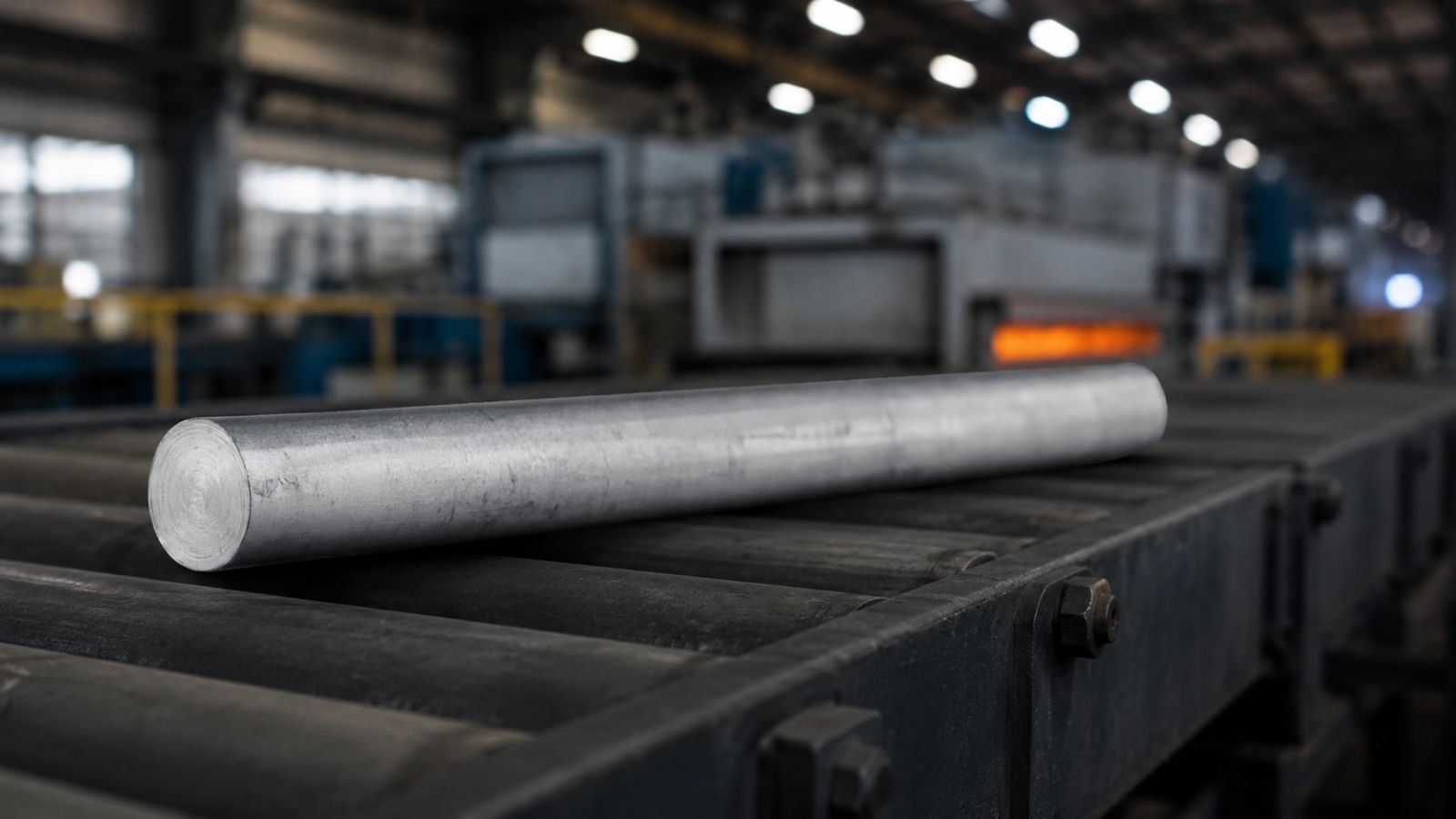
Every conductor that carries electricity across a transmission line begins as a simple round rod of aluminium. What happens during the production of that rod determines whether the final conductor performs reliably for decades or develops problems within a few years of installation. This is why aluminium wire rod manufacturing conductivity has become such a critical focus area for manufacturers supplying utilities and cable producers across the globe. At Prem Cables, we control every stage of this process closely, ensuring each rod leaving our facility meets strict conductivity benchmarks before it ever reaches a customer.
This blog walks through how aluminium wire rod is manufactured for consistent conductivity and why this precision matters for buyers from India to markets like the United States and the UAE.
Electrical conductivity is not something manufacturers can adjust after the fact. It depends almost entirely on the purity of the aluminium used and how carefully the metal is processed during casting and rolling. Even minor impurities introduced during production can measurably reduce a rod's conductivity rating, which then carries forward into every conductor made from that batch.
This is why the wire rod conductivity process demands tight control at every single stage. Manufacturers cannot simply test the final product and hope it meets specification. Instead, quality has to be built in from the moment raw aluminium ingots enter the production line, through casting, rolling, and final inspection.
Utilities and cable manufacturers purchasing rod in bulk rely heavily on this consistency. A single batch of rod feeds into thousands of meters of finished conductor, so any conductivity variation within that batch creates performance inconsistency across an entire installed transmission or distribution line.
Most modern aluminium wire rod, including what Prem Cables produces, relies on a continuous cast wire rod method rather than older batch casting techniques. In this process, molten aluminium flows continuously through a casting wheel and belt system, solidifying into a bar that then passes directly into a rolling mill without interruption.
This continuous approach offers a significant advantage over older methods. Since the metal never stops moving through the system, temperature and cooling rates remain far more consistent throughout production. This consistency directly translates into more uniform grain structure within the aluminium, which in turn supports stable conductivity readings across the entire production run.
Prem Cables operates continuous cast wire rod lines at our facility in Pipalia Kalan, Rajasthan, allowing us to produce EC grade and alloy rod with minimal variation between batches. This production method also improves surface quality, reducing the likelihood of defects that could affect performance once the rod is drawn into finished wire.
Achieving strong aluminium rod electrical conductivity starts with raw material selection. High-purity aluminium ingots form the foundation of every conductivity claim a manufacturer makes, since even small amounts of iron or silicon impurity can measurably lower the final conductivity percentage.
Once cast, the rod undergoes controlled rolling that gradually reduces its diameter while maintaining the metal's internal grain structure. This rolling process must be carefully managed, since excessive heat or uneven pressure during rolling can introduce inconsistencies that show up later as conductivity variation across different sections of the same coil.
Prem Cables verifies aluminium rod electrical conductivity at multiple points during production rather than relying solely on final testing. Our EC grade rods consistently achieve a minimum of 61% IACS conductivity, a benchmark widely recognized across international markets, including cable manufacturers in the United States who often reference IACS ratings when specifying raw material requirements for their own production.
Consistency across batches matters just as much as achieving strong conductivity in a single test sample. Buyers placing large orders, whether for domestic Indian projects or export shipments to markets like Dubai and the wider Gulf region, need assurance that every coil in their order performs identically to the last.
Prem Cables addresses this through systematic quality checkpoints built into our aluminium wire rod manufacturing conductivity process. Samples are drawn at regular intervals throughout production, with conductivity, tensile strength, and diameter tolerance all verified before any rod is approved for dispatch. This structured approach catches deviations early, before an entire batch moves further down the production line.
Diameter consistency also plays a supporting role in conductivity performance. Prem Cables maintain diameter tolerances within ±0.5 mm across our 7.6 mm to 15 mm rod range, since uneven diameter can create localized resistance variation once the rod is drawn into finished conductor wire.
International buyers evaluating aluminium wire rod suppliers often compare manufacturing processes as closely as they compare pricing. Markets across the Middle East, including construction-heavy hubs like Dubai, have seen substantial infrastructure growth in recent years, driving demand for dependable raw material suppliers who can maintain quality across large export orders.
Prem Cables has built export relationships across Asia, Africa, and the Middle East, supplying wire rod and finished conductors to clients who depend on consistent quality regardless of shipment size. Our manufacturing facility operates under ISO 9001:2015 certification, giving international buyers documented assurance of our quality management systems.
For conductor manufacturers looking to understand our complete rod specifications, our aluminium wire rods page details the full range of EC grade and alloy options available. Buyers interested in seeing how this rod translates into finished conductor products can also explore our ACSR conductor range and AAAC conductor solutions, both manufactured using our in-house rod production.
As global demand for reliable power infrastructure continues rising, the raw material feeding conductor manufacturing needs to keep pace with equal reliability. Manufacturers and utilities sourcing wire rods for their next project can connect with our technical team to discuss conductivity specifications and bulk order requirements.
Conductivity performance ultimately determines how well a power network functions for decades after installation. Through disciplined aluminium wire rod manufacturing conductivity practices, Prem Cables continues supplying the dependable raw material that conductor manufacturers around the world rely on.
Aluminium wire rod manufacturing conductivity directly determines how efficiently the finished conductor carries electricity. Prem Cables controls purity and processing at every stage to maintain consistent conductivity across every batch.
Continuous cast wire rod involves casting molten aluminium into a bar that moves directly into rolling without interruption. This method improves temperature consistency and produces more uniform conductivity compared to older batch casting techniques.
Prem Cables manufactures EC grade wire rod with a minimum conductivity of 61% IACS, a globally recognized benchmark for aluminium rod electrical conductivity.
Prem Cables tests samples at multiple stages during production, checking conductivity, tensile strength, and diameter tolerance before approving any batch for dispatch.
Yes. Uneven diameter can create localized resistance variation in finished conductors. Prem Cables maintain diameter tolerances within ±0.5 mm to support stable conductivity performance.
Yes. Prem Cables supplies wire rod to clients across Asia, Africa, and the Middle East, backed by ISO 9001:2015 certification and consistent quality checkpoints throughout manufacturing.
High-purity aluminium ingots with minimal iron and silicon content are essential for achieving strong wire rod electrical conductivity, since even small impurities can measurably reduce performance.
Manufacturers and utilities can contact the Prem Cables team directly through the company website to discuss wire rod specifications, conductivity requirements, and bulk order timelines.


