

Few purchase orders look simpler than an AB cable order. You list the cores, the sizes and the length, and you wait for quotes. Yet the supplier you pick decides how many faults, replacements and complaints your low voltage network sees over the next twenty years. That is why choosing an aerial bundled cable manufacturer in India deserves a proper technical check, not just a price comparison.
This guide shows what to ask, which documents to request and which warning signs to watch for. It draws on the published specifications of the Prem Cables aerial bundled cable range.
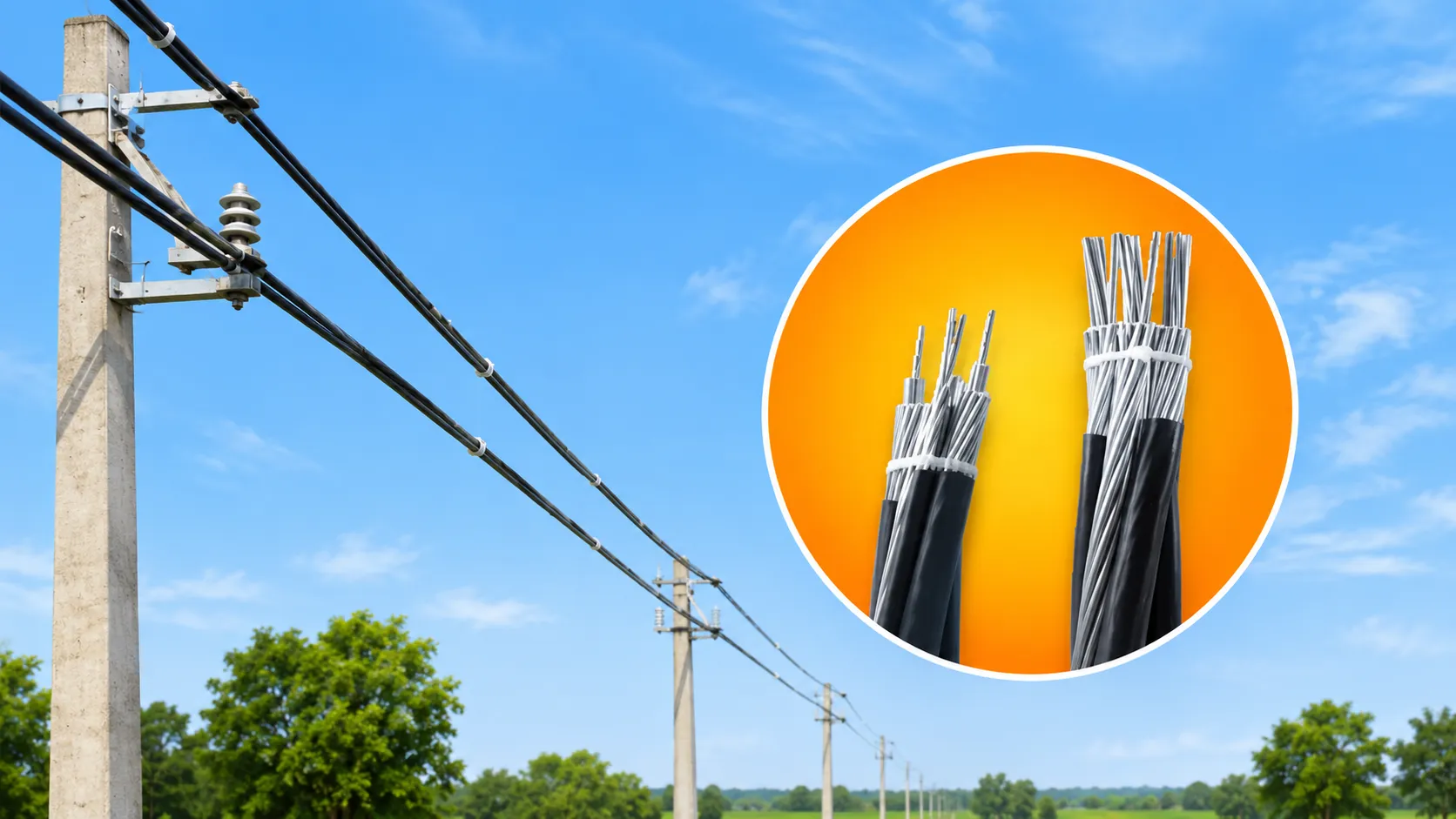
An AB cable is an overhead power cable for low voltage distribution up to 1.1 kV. It twists insulated aluminium phase cores around a central messenger that carries the mechanical load. The whole bundle hangs from poles as one neat cable.
Compared with bare conductors, the insulated bundle cuts faults from branches, birds and wind-blown objects. It also makes illegal tapping harder. These gains only appear when the cable itself meets its standard, which is where the manufacturer matters most.
In India, IS 14255 governs aerial bunched cables for working voltages up to 1,100 V. You will see both "bunched" and "bundled" in the market. Both words describe the same LT overhead product.
Prem Cables designs and manufactures its AB cables as per IS 14255 and customer specifications. It also references IS 8130 for conductors, IS 7098 Part 1 for XLPE insulation properties, the IS 10810 series for test methods and IEC 60502-1 where a utility asks for an international reference.
Always name the exact standard in your purchase order. A line that says only "as per Indian standard" leaves too much room for interpretation.
A good manufacturer states each construction detail clearly. Check these points in every quotation.
Phase conductors. The Prem range uses aluminium conductors of H2 or H4 grade, with resistance as per IS 8130.
Insulation. The phase cores carry XLPE or PE insulation. Prem Cables uses black, UV-resistant insulation, because the cable sits in direct sunlight for its whole life.
Messenger. A centrally placed aluminium alloy messenger takes the span tension. Ask for its size, alloy and breaking load, since it carries the real mechanical risk.
Core identification. Cores should carry clear, lasting markings, so crews can identify phases during termination.
A capable supplier can match your network design without forcing you into a narrow catalogue. Prem Cables supplies these combinations:
Phase conductor sizes run from 16 to 150 sq.mm, and messenger sizes typically run from 25 to 95 sq.mm. Decide your configuration before you request quotes. A mismatch between the cable and the network design causes more site rework than any other single error.
Test evidence separates a real manufacturer from a trader. Ask for these documents with every offer.
The BIS product manual for IS 14255 lists the checks that matter. They include insulation thickness, core identification, conductor tensile and resistance tests, messenger breaking load and elongation, and insulation tests such as hot set, shrinkage and water absorption for XLPE. A high voltage test on each length of finished cable is also part of the requirement.
Request routine test reports for every lot, and ask which tests the supplier performs in its own laboratory. Prem Cables runs ISO 9001:2015 certified processes and an in-house testing laboratory, which lets it check lots before dispatch. A brochure line saying "as per IS 14255" proves little by itself. Test reports prove it.
Use these questions to separate strong suppliers from weak ones.
Honest, specific answers signal a supplier that understands its own product.
Importers face extra checks. They need clear drum labelling, correct marking, shipping documents and compliance with their own utility specification. Ask whether the manufacturer has experience with orders outside India.
Prem Cables manufactures to IS, BS, IEC, SS and ASTM standards and serves clients across Asia, Africa and the Middle East. That mix of standards helps when a foreign utility asks for something other than the Indian specification.
Even a well-made cable can fail early if crews damage it before installation. A small cut in the insulation can let moisture in and start a fault months later.
Agree on drum type, drum length and packing before dispatch. Ask the supplier to seal cable ends, so moisture cannot enter during storage and transport. Store drums upright and away from direct water, and use rollers during stringing.
Our guide to LT power cable installation practices covers the broader site habits that protect any low voltage cable. It also explains why careful handling pays back in fewer faults.
Price tables hide as much as they show. Two quotes may look equal on paper while one leaves out tests, packing or freight. Bring every offer onto the same footing before you compare totals.
Start with a one-page sheet that lists the same items for every bidder: configuration, phase size, messenger size, insulation type, standard, test reports, drum length, packing, delivery period and payment terms. Fill in each column from the quotation, and mark every blank. A blank cell usually means the bidder did not price that item, or does not offer it.
Next, check what the price includes. Some offers cover type test certificates and routine test reports for each lot. Others charge extra or skip them. Some include delivery to site, while others quote ex-works. These differences can change the real cost by a wide margin.
Then ask for proof. Request a short list of earlier supply orders of a similar size, and ask if you may speak to a customer. A manufacturer with a good record will usually agree. If your order is large, plan a visit to the plant and the testing laboratory. Watch how the team stores raw material, handles drums and records test results.
Finally, look at the support behind the sale. Who answers technical questions after the order? How does the supplier handle a damaged drum or a failed test? A fair, written answer to these questions tells you a lot about how the relationship will run.
A slightly higher price from a documented manufacturer often costs less in the end than a cheap offer that fails at site.
Prem Cables has manufactured aluminium conductors and cables since 1964, starting at Pipalia Kalan in Rajasthan. Its AB cable range builds on that long experience with aluminium products for distribution networks.
The company combines ISO 9001:2015 certified processes with an in-house testing laboratory. For utilities and EPC contractors, that means documented quality and one accountable manufacturer. To see why insulated LT cables keep gaining ground, read our article on why low tension aluminium cables are in high demand across industries.
Choosing an aerial bundled cable manufacturer in India comes down to evidence. Look for a clear standard, stated construction details, real test reports, flexible configurations and honest answers. A cable that passes these checks protects your network, your crews and your budget for decades.
If you are planning an LT overhead project, review the AB cable specifications, then contact the Prem Cables team to discuss configurations, sizes and technical documents.
No single name suits every project. Choose a manufacturer that builds to IS 14255, runs its own testing laboratory, shares test reports and supports your configuration and delivery needs.
It is an overhead low voltage cable that twists insulated aluminium phase cores around a central messenger. It carries power up to 1.1 kV on poles and replaces bare conductors.
IS 14255 is the main Indian standard for aerial bunched cables up to 1,100 V. Related references include IS 8130 for conductors and IS 7098 Part 1 for XLPE insulation.
Nothing in practice. IS 14255 uses the word "bunched", while many suppliers and buyers say "bundled". Both describe the same LT overhead product.
Prem Cables lists phase conductor sizes from 16 to 150 sq.mm and messenger sizes typically from 25 to 95 sq.mm.
An AB cable made to IS 14255 serves working voltages up to and including 1.1 kV.
Ask for routine and type test reports, confirm the standard, review the messenger details and check whether the supplier tests lots in its own laboratory.
Yes. Importers should confirm marking, drum labelling, documents and compliance with their own utility specification before they order.


