
.png)
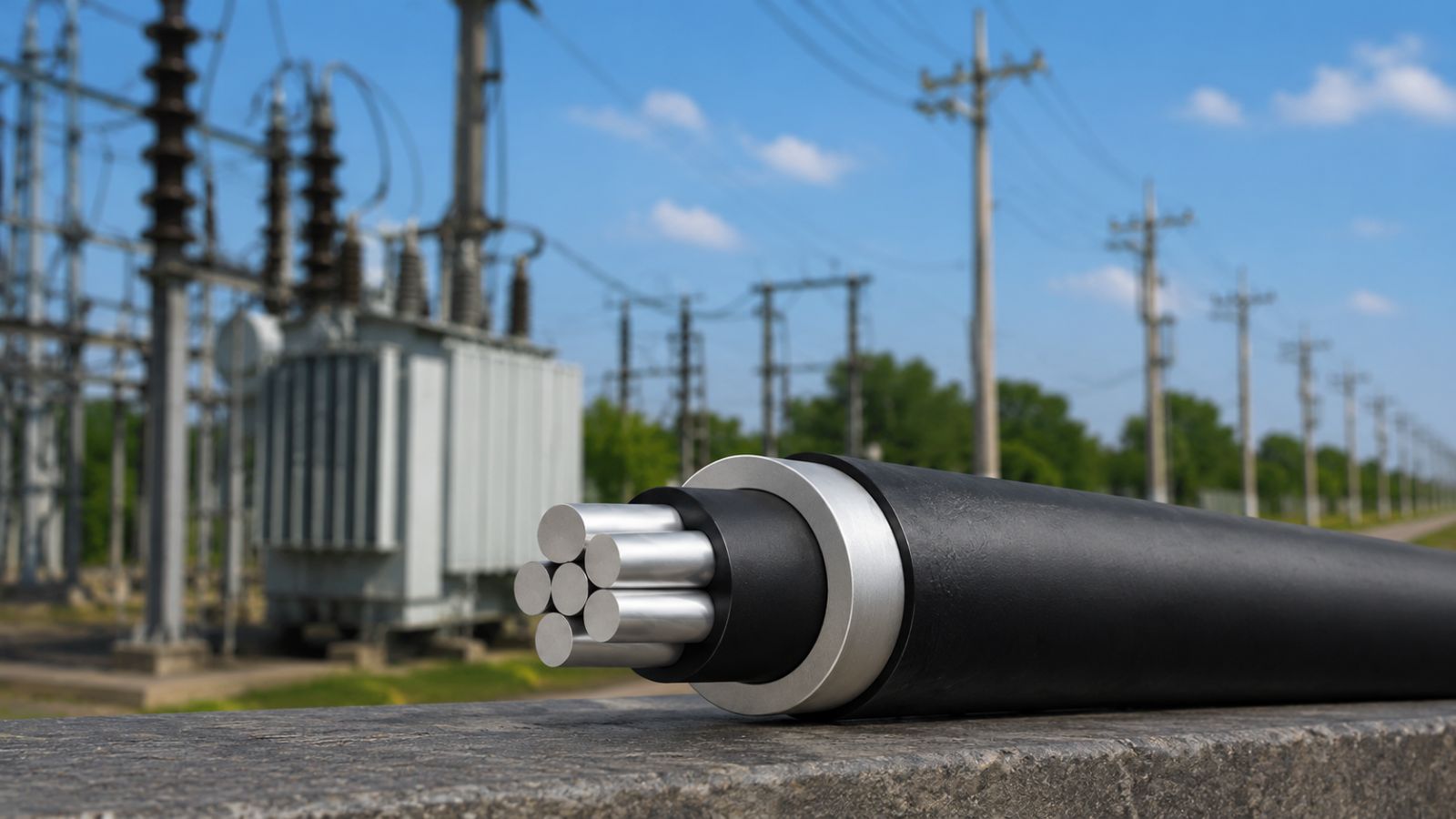
Ask any DISCOM engineer what keeps them up at night, and aggregate technical and commercial losses will come up within the first few sentences. India's distribution utilities have chased this number down from 21.91% in FY21 to just over 15% in FY25, and a large share of that improvement traces back to one government-backed program. MVCC cable Revamped Distribution Sector Scheme (RDSS) demand has climbed steadily as this program pushes utilities to replace ageing bare conductors with insulated alternatives across their most loss-prone feeders. At Prem Cables, we manufacture MVCC conductors that fit directly into this modernization push, giving DISCOMs a proven way to hit their loss-reduction targets.
The Revamped Distribution Sector Scheme launched in July 2021 under the Ministry of Power, backed by an outlay running past ₹3 lakh crore over five years. Its core mandate splits into two buckets, prepaid smart metering and distribution infrastructure works, with the infrastructure component covering exactly the kind of conductor replacement that feeds MVCC demand.
Roughly ₹1.5 lakh crore of RDSS funding has gone specifically toward loss-reduction infrastructure, including feeder segregation, substation augmentation, and the replacement of ageing conductors identified as major contributors to technical losses. Since RDSS operates on a results-linked model, DISCOMs only unlock further funding tranches by showing measurable improvement, which puts real pressure on state utilities to choose conductor upgrades that deliver visible results fast.
This funding structure explains why conductor selection under RDSS carries more weight than in a typical maintenance budget cycle. A DISCOM spending public infrastructure money against a performance benchmark cannot afford to pick a conductor that only marginally improves loss figures.
Many state RDSS project specifications now call for covered conductors on feeders identified as high-loss, high-theft, or vegetation-prone. An RDSS covered conductor requirement typically points utilities toward exactly the kind of insulated construction MVCC cables provide, since the scheme's own loss-reduction logic favors infrastructure that addresses the root causes of technical and commercial losses rather than symptoms.
Feeder segregation projects under RDSS often run parallel to conductor replacement work, since separating agricultural and domestic feeders only delivers its full benefit when paired with conductors capable of handling the resulting load redistribution reliably. MVCC's improved current-carrying capacity and reduced fault rate make it a natural fit for these combined upgrade projects.
Prem Cables manufactures MVCC conductors rated for 11 kV, 22 kV, and 33 kV distribution networks, matching the voltage classes most commonly specified in RDSS infrastructure tenders across Indian states. Our conductors comply with IS 398 Part-II, IS 398 Part-IV, and IEC 61089, giving procurement teams documentation that aligns with typical RDSS technical qualification criteria.
State DISCOMs report billing efficiency improvements from 84.08% in FY21 to 87.59% in FY25 under RDSS, alongside collection efficiency gains from 92.9% to 97% over the same period. These figures matter directly to conductor procurement, since a large share of technical loss reduction traces back to physical infrastructure changes rather than billing software alone.
MVCC cable government scheme adoption tends to concentrate first in states with the highest historical AT&C losses, since RDSS funding prioritization favors utilities that can demonstrate the steepest improvement curve. Rajasthan, along with several other states carrying legacy loss burdens, has moved aggressively on conductor upgrades as part of its broader RDSS rollout.
Prem Cables tracks this state-level rollout pattern closely, since it directly shapes where demand for MVCC conductors concentrates within a given fiscal year. Our production planning at the Pipalia Kalan facility accounts for this uneven regional demand, allowing us to respond quickly when a particular state DISCOM issues a large infrastructure tender.
RDSS operates on a TOTEX model, blending capital and operational expenditure to encourage outcome-based contracting. This structure changes how utilities approach distribution scheme cable supply, since contractors and suppliers now share accountability for long-term performance rather than simply delivering material against a purchase order.
Reliable supply timelines matter enormously under this model, since RDSS funding disbursement ties directly to measurable performance improvement within defined windows. A conductor supplier who cannot deliver consistent quality at the volume and speed RDSS projects demand becomes a direct liability to the DISCOM's funding eligibility.
Prem Cables addresses this through an annual manufacturing capacity of 150,000 MT across integrated production lines, supported by ISO 9001:2015 certification and in-house testing before every dispatch. This scale allows us to support state-level RDSS tenders without the extended lead times that could jeopardize a DISCOM's performance benchmarks.
India is not alone in tying distribution infrastructure funding to measurable performance outcomes. Utility grid-hardening initiatives across parts of the United States link infrastructure investment to reliability metrics in a comparable way, while rapidly expanding Gulf cities continue investing heavily in modern distribution infrastructure to match their pace of urban growth.
Prem Cables supplies MVCC and related covered conductor products to clients across Asia, Africa, and the Middle East, giving us practical experience supporting distribution modernization programs that share RDSS's underlying logic even where the specific scheme name differs. This international exposure also means our manufacturing standards already align with specifications utilities outside India commonly reference.
For DISCOMs and EPC contractors working on RDSS-funded projects, this global manufacturing experience translates into a supplier who understands both the technical requirements and the delivery discipline these performance-linked programs demand.
DISCOMs and contractors preparing RDSS submissions benefit from engaging conductor suppliers early in the planning process, well before tender specifications get finalized. Prem Cables works directly with utility engineering teams to align MVCC specifications with each state's specific RDSS technical requirements and feeder conditions.
Our complete MVCC conductor range outlines the specifications procurement teams need when preparing RDSS-linked infrastructure bids. Utilities managing feeders that combine urban theft-prone stretches with adjacent rural or forested terrain can also review how MVCC performs across these varied conditions in our related coverage on urban distribution networks.
As RDSS implementation continues through its scheme period, demand for qualified MVCC suppliers will likely keep pace with each new round of state infrastructure tenders. DISCOMs and contractors ready to discuss their next RDSS-linked conductor requirement can connect with our technical team for specifications and bulk supply timelines.
MVCC cable RDSS scheme demand is rising because state DISCOMs are using RDSS infrastructure funding to replace ageing bare conductors with insulated alternatives on high-loss feeders. Prem Cables supply MVCC conductors that meet these upgrade requirements directly.
An RDSS covered conductor requirement usually calls for insulated construction on feeders marked as high-loss, theft-prone, or vegetation-heavy, which aligns closely with MVCC cable specifications from Prem Cables.
MVCC cable government scheme projects deliver measurable loss reduction that aligns with RDSS's results-linked funding model, making covered conductors a more strategic choice than standard bare conductor replacement.
Since RDSS ties funding disbursement to performance benchmarks, distribution scheme cable supply needs to be fast and consistent. Prem Cables supports this through a 150,000 MT annual manufacturing capacity and in-house quality testing.
States with historically higher AT&C losses, including Rajasthan and several others under active RDSS rollout, have prioritized MVCC and covered conductor upgrades as part of their infrastructure improvement plans.
Yes. Prem Cables manufactures MVCC conductors compliant with IS 398 Part-II, IS 398 Part-IV, and IEC 61089, aligning with technical qualification criteria commonly used in RDSS infrastructure tenders.
AT&C losses declined from 21.91% in FY21 to around 15% in FY25 under RDSS, with infrastructure upgrades like conductor replacement contributing significantly to this improvement.
DISCOMs and EPC contractors can contact the Prem Cables team directly through the company website to discuss MVCC specifications and supply timelines aligned with RDSS project requirements.


