
.png)
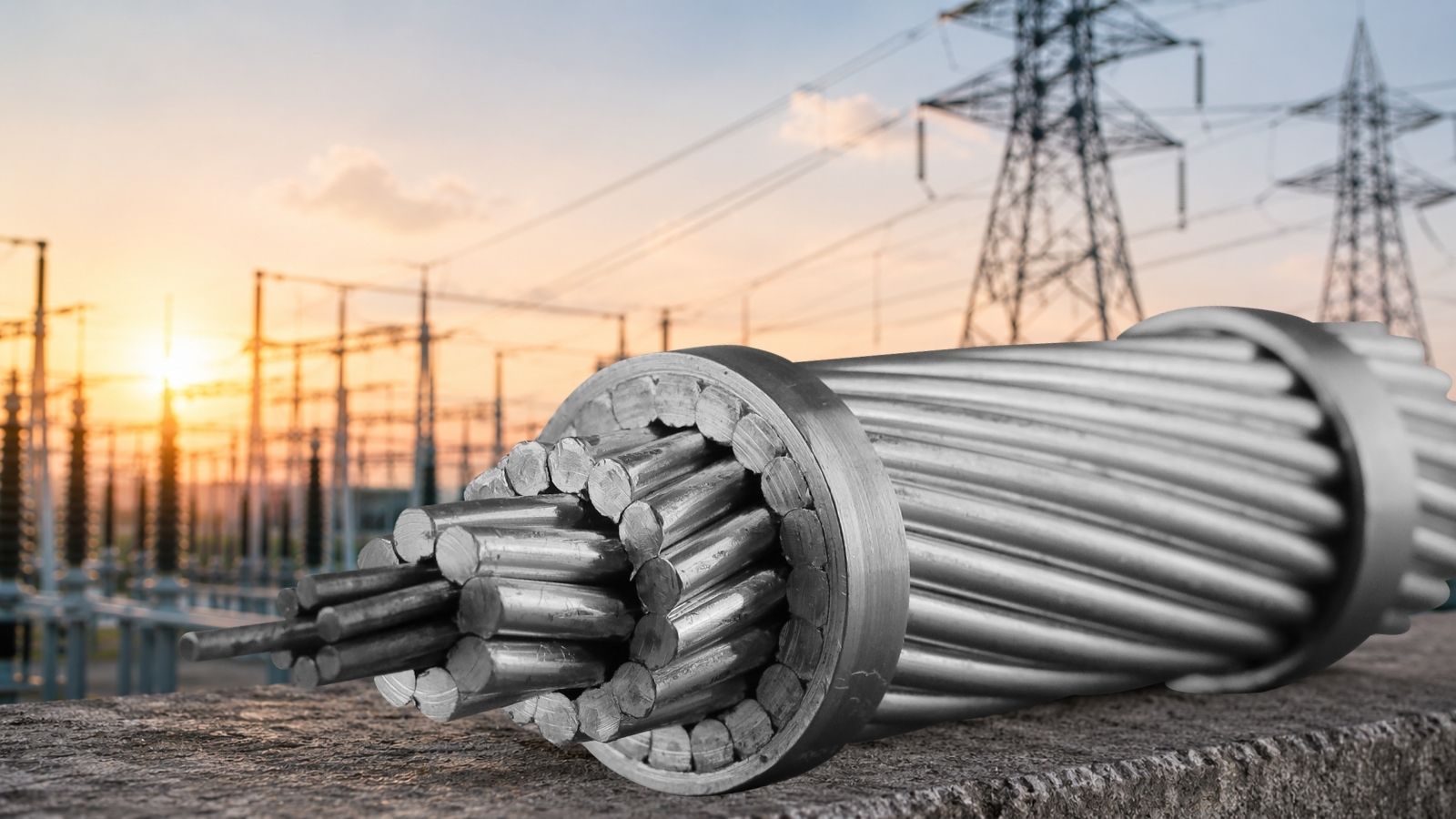
Every unit of electricity generated at a power plant does not fully reach the customer at the other end of the line. A portion of that energy disappears along the way, lost as heat within the conductor itself. This loss represents real money and real strain on power systems everywhere, which is why aluminium conductors reduce transmission losses in ways that matter directly to utility budgets and grid efficiency. At Prem Cables, we manufacture conductors engineered specifically to minimize this energy loss, helping utilities across India and international markets improve overall network performance.
Every conductor carrying electric current generates some resistance, and this resistance converts a portion of the electrical energy into heat. This phenomenon, commonly known as I²R loss, increases as current rises or as conductor resistance increases due to material choice, cross-sectional area, or manufacturing quality.
Utilities lose billions in revenue globally each year simply moving electricity from generation points to end users. While some loss is unavoidable due to basic physics, the amount lost depends heavily on conductor selection and construction quality. This makes conductor design one of the most direct levers utilities have for improving overall network efficiency.
Distance compounds this problem significantly. Long transmission corridors, common across large countries like India and expansive desert regions in the Middle East, accumulate more resistance simply because current travels through more conductor material. This is why choosing the right conductor matters even more for utilities managing extensive rural or cross-regional transmission networks.
A low loss overhead conductor achieves better efficiency through careful attention to material purity, cross-sectional design, and manufacturing consistency. Higher purity aluminium offers lower electrical resistance compared to lower-grade material, which directly translates into reduced heat generation and less wasted energy during transmission.
Conductor design also plays a role beyond material purity alone. Stranding configuration, surface finish, and overall cross-sectional area all influence how efficiently current flows through the conductor. Prem Cables engineers its conductor range with these factors carefully balanced, ensuring each product delivers strong conductivity without unnecessary resistance losses.
Since transmission losses scale with the square of current flowing through a conductor, even small improvements in conductor efficiency compound significantly across a heavily loaded network. Utilities operating in high-demand regions, including rapidly growing urban centers like Dubai, benefit substantially from selecting conductors optimized for this kind of loss reduction from the outset.
Transmission and distribution losses directly affect a utility's bottom line, since energy lost in transit represents power the utility purchased or generated but never billed to a customer. A well-chosen T&D loss reduction conductor strategy can meaningfully improve this financial picture over the lifetime of a transmission asset.
Utilities evaluating conductor options often focus too narrowly on upfront material cost without fully accounting for long-term loss expenses. A slightly more expensive conductor with better conductivity characteristics can pay for itself many times over across decades of operation, simply through the cumulative energy savings it delivers compared to a lower-quality alternative.
Prem Cables manufactures its aluminium conductors with this lifecycle value in mind. Our EC grade aluminium maintains a minimum conductivity of 61% IACS, giving utilities a dependable baseline for calculating expected loss performance across their network planning. This consistency helps utility engineers model loss reduction outcomes accurately before committing to large-scale procurement.
Beyond standard aluminium conductors, certain alloy variants offer additional efficiency advantages for specific applications. An energy efficient overhead conductor built with optimized alloy composition can deliver improved strength-to-weight ratios alongside strong conductivity, allowing utilities to reduce both mechanical losses and electrical resistance simultaneously.
Prem Cables produces several conductor types suited to this efficiency goal, including AAAC and AL 59 alloy conductors. These options combine good conductivity with mechanical properties that support longer spans and reduced sag, indirectly improving efficiency by allowing fewer support structures across a given transmission corridor.
For utilities managing renewable energy integration, loss reduction becomes especially important since solar and wind projects often connect through longer evacuation corridors to reach the main grid. Choosing energy efficient overhead conductor solutions for these connections helps preserve more of the renewable energy generated before it reaches end consumers.
Manufacturing precision directly supports loss reduction goals, since inconsistent material quality or dimensional variation can introduce resistance irregularities across a conductor's length. Prem Cables addresses this through rigorous quality control at every production stage, from raw aluminium sourcing through final conductor stranding.
Our facility in Pipalia Kalan, Rajasthan, operates with in-house testing laboratories that verify conductivity and mechanical properties for every production batch. This testing ensures that aluminium conductors reduce transmission losses consistently across large orders, rather than only meeting specification in isolated samples.
We also maintain ISO 9001:2015 certification, reflecting a structured quality management approach that international buyers, including utilities across the United States and Gulf markets, look for when evaluating conductor suppliers for loss-sensitive infrastructure projects. For utilities exploring specific product options, our AAAC conductor range offers strong conductivity performance for standard distribution applications, while our AL 59 alloy conductor line provides enhanced strength alongside dependable conductivity for more demanding installations.
Utilities planning new transmission projects or reconductoring existing corridors should evaluate conductor options through a lifecycle lens rather than focusing solely on initial procurement cost. Since losses accumulate continuously throughout a conductor's operational life, even modest efficiency improvements deliver substantial savings when measured across decades of service.
Prem Cables works directly with utility engineers to recommend conductor specifications aligned with each project's loss reduction goals, taking into account expected load profiles, span lengths, and regional climate conditions. This consultative approach helps utilities avoid selecting conductors based on price alone, which can lead to higher long-term operational costs.
As global power demand continues rising alongside growing renewable energy integration, transmission efficiency will remain a central priority for utilities worldwide. Utilities and EPC contractors looking to reduce network losses through better conductor selection can connect with our technical team to discuss specifications suited to their specific efficiency goals.
Reducing transmission losses requires attention to detail at every stage, from raw material purity through final conductor assembly. Through carefully engineered products designed so that aluminium conductors reduce transmission losses effectively, Prem Cables continues supporting utilities in building more efficient, cost-effective power networks around the world.
Aluminium conductors reduce transmission losses through high material purity and optimized stranding design, which lowers electrical resistance and minimizes heat generated during current flow. Prem Cables engineers its conductors specifically for this efficiency.
A low loss overhead conductor is designed with high-purity aluminium and efficient cross-sectional construction to minimize I²R losses, reducing the amount of energy wasted as heat during transmission.
T&D loss reduction conductor selection directly affects a utility's operational costs, since energy lost in transit represents unbilled power. Choosing efficient conductors improves long-term financial performance.
Yes. Prem Cables manufactures AAAC and AL 59 alloy conductors as energy efficient overhead conductor solutions, combining strong conductivity with improved mechanical performance.
Higher purity aluminium offers lower electrical resistance, which directly reduces heat loss during transmission. Prem Cables maintains a minimum conductivity of 61% IACS across its EC grade conductors.
Yes. Utilities in high-demand areas, including rapidly growing cities like Dubai, benefit significantly from low loss overhead conductor solutions due to the higher current loads typical in dense urban networks.
Prem Cables holds ISO 9001:2015 certification, reflecting consistent quality management practices trusted by utilities across India, the United States, and the Middle East.
Utilities and EPC contractors can contact the Prem Cables team directly through the company website to discuss conductor specifications aimed at reducing transmission losses for their specific project.


