
.png)
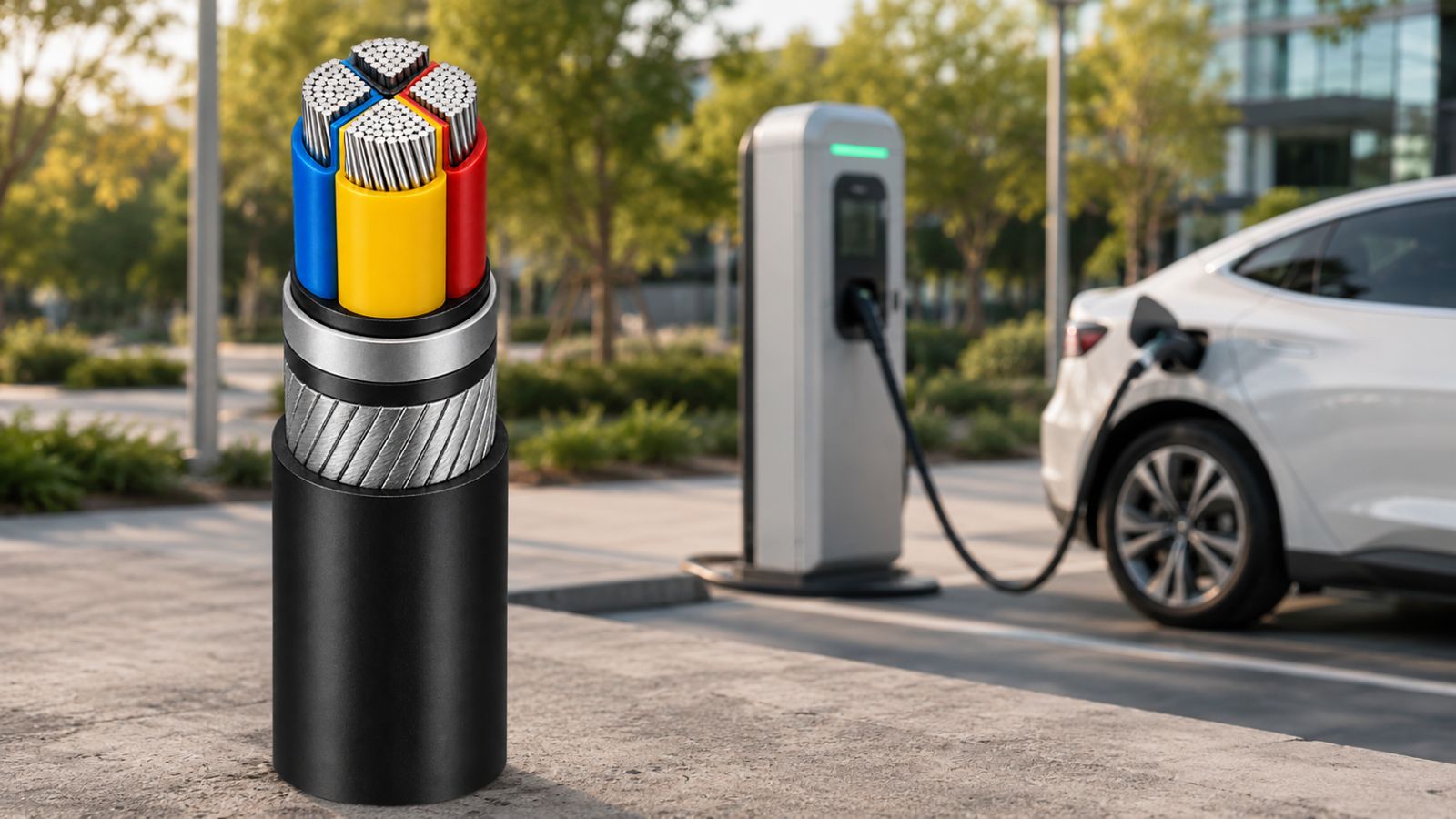
India's electric vehicle market has grown at a pace few anticipated just a few years ago. As more EVs hit the road, the charging infrastructure supporting them needs to expand just as quickly, and this expansion depends heavily on one component working correctly behind every charging point. LT power cables EV charging installations form the critical link between the grid and the charger, delivering power safely and consistently to every vehicle that plugs in. At Prem Cables, we manufacture LT power cables designed specifically to meet the demanding electrical requirements of this fast-growing charging network.
This blog explores why EV charging infrastructure is becoming a major driver of LT cable demand and how Prem Cables supports this transition with reliable, standards-compliant cabling solutions.
Charging stations place unique demands on electrical infrastructure that differ significantly from typical residential or commercial wiring. Fast chargers draw substantial current in short bursts, which puts continuous thermal stress on the cables feeding them. An EV charging station cable therefore needs to handle repeated load cycling without degrading over time.
Standard wiring solutions were never designed with this pattern of usage in mind. Charging stations often operate multiple hours daily, with current draw fluctuating based on charging speed and vehicle battery capacity. Cables installed at these stations must maintain stable performance through thousands of charging cycles across their operational lifespan.
Prem Cables addresses this challenge through XLPE-insulated LT power cables engineered to withstand continuous operation at 90°C, with short-circuit tolerance reaching up to 250°C. This thermal resilience matters significantly for charging stations, where cable runs often sit close to power electronics that generate additional ambient heat during operation.
Charging infrastructure spans a wide range of setups, from slow home chargers to high-power fast-charging hubs along highways. Each configuration places different demands on the underlying cabling, which means LT cable charging infrastructure planning must account for these varying load profiles from the design stage itself.
Residential and workplace charging points typically operate at lower power levels, making standard LT power cables suitable for these installations without major modifications. Public fast-charging stations, however, require cables capable of handling much higher current loads safely, often necessitating larger cable sizes and additional protective features.
Prem Cables manufactures LT power cables across a wide range, from 4 sq.mm up to 1000 sq.mm, with current ratings extending up to 1,013 A depending on installation conditions. This range gives charging infrastructure developers flexibility to select the exact cable specification needed for each charging point, whether it serves a residential complex or a highway fast-charging corridor.
Public charging stations introduce safety considerations that go beyond typical electrical installations, since these cables often run through spaces accessible to the general public. An electric vehicle power cable installed at a public station must therefore prioritize both fire safety and mechanical protection against accidental damage.
Prem Cables offers FRLS and LSZH sheath variants for exactly this purpose. These insulation types slow flame propagation and reduce toxic smoke emission during fire events, which becomes especially important in enclosed parking structures where charging stations are frequently installed. This fire safety performance protects both people and property in the rare event of an electrical fault.
Armoured cable options add another layer of protection for underground or exposed installations common at charging stations. Since many charging points sit in parking areas exposed to vehicle movement and occasional mechanical stress, armoured LT power cables resist damage from accidental impact far better than unarmoured alternatives.
India's EV charging network is expanding rapidly across highways, urban centers, and residential complexes as government policy continues supporting electric mobility adoption. This growth has created steady demand for LT power cables EV charging solutions that can be deployed quickly without compromising on safety or performance.
Charging infrastructure developers increasingly look for cable suppliers who understand both the technical requirements and the compliance standards specific to this sector. Prem Cables manufactures cables compliant with IS 7098 Part 1 and IEC 60502-1 standards, giving developers confidence that their installations will meet regulatory requirements without additional testing delays.
Beyond technical compliance, project timelines matter significantly in this fast-growing sector. Charging network operators often work on aggressive rollout schedules to capture market share early. Prem Cables supports these timelines through our manufacturing facility in Pipalia Kalan, Rajasthan, which operates with an annual capacity of 150,000 MT, allowing us to fulfill large infrastructure orders without long lead times.
Quality assurance remains central to how we approach cable manufacturing for charging infrastructure. Every batch of LT power cables passes through AI-assisted machine-vision inspection alongside in-house laboratory testing, ensuring consistent performance across large orders that charging network operators depend on for multi-site rollouts.
Prem Cables also recognizes that EV infrastructure often connects to broader distribution networks requiring higher voltage cabling upstream. For projects that need substation-level distribution feeding into charging networks, our HT XLPE cables provide a reliable option for that upstream connection. Developers planning underground cable runs across charging hub sites can also explore our PVC LT underground cables for durable buried installations.
Our complete LT power cables range outlines the full technical specifications available for charging infrastructure and other commercial applications. Since EV charging demand shows no signs of slowing down, developers benefit from partnering with a manufacturer who can scale supply alongside their expansion plans.
As India continues building out its EV charging network across cities and highway corridors, the underlying cable infrastructure will remain just as important as the chargers themselves. Developers and EPC contractors planning their next charging infrastructure project can connect with our technical team to discuss LT power cable specifications suited to their specific rollout requirements.
Electric vehicle adoption in India shows every sign of accelerating further in the coming years, and the cabling supporting this transition needs to keep pace. Prem Cables remains committed to supplying the reliable, standards-compliant LT power cables that keep EV charging infrastructure running safely across the country.
LT power cables EV charging installations deliver power safely from the grid to the charger, handling repeated load cycling and thermal stress that standard wiring is not designed for.
A reliable EV charging station cable needs high thermal tolerance, fire-resistant insulation, and mechanical durability. Prem Cables manufactures XLPE-insulated cables that meet these requirements for charging installations.
Yes. Prem Cables provides FRLS and LSZH sheath variants for LT cable charging infrastructure, reducing flame spread and toxic smoke emission in enclosed parking and charging areas.
Prem Cables manufactures LT power cables from 4 sq.mm to 1000 sq.mm, with current ratings up to 1,013 A, suitable for both residential chargers and high-power fast-charging stations.
Yes. Prem Cables offers armoured LT power cable variants suitable for underground and exposed installations common at EV charging stations and parking facilities.
Prem Cables manufactures LT power cables in compliance with IS 7098 Part 1 and IEC 60502-1 standards, meeting regulatory requirements for EV charging infrastructure projects in India.
Yes. Prem Cables operates a manufacturing facility with an annual capacity of 150,000 MT, allowing it to fulfill large LT power cables EV charging orders without long lead times.
Developers and EPC contractors can contact the Prem Cables team directly through the company website to discuss technical specifications and bulk order requirements for EV charging projects.


