
.png)
Choosing the right Industrial Cables Manufacturer in India is a strategic decision that can significantly influence the efficiency, safety, and longevity of your electrical infrastructure. Whether planning a heavy-industry project, upgrading power grids, or designing robust factory electrical networks, the selection of cables isn’t just about price; it’s a delicate balance of cost, durability, and performance.
Today’s industrial environments demand cables that can withstand harsh conditions, maintain electrical integrity under load, and comply with stringent national and international standards. For engineers, project managers, and procurement teams seeking dependable cable partners, understanding what truly matters in industrial cables is essential.
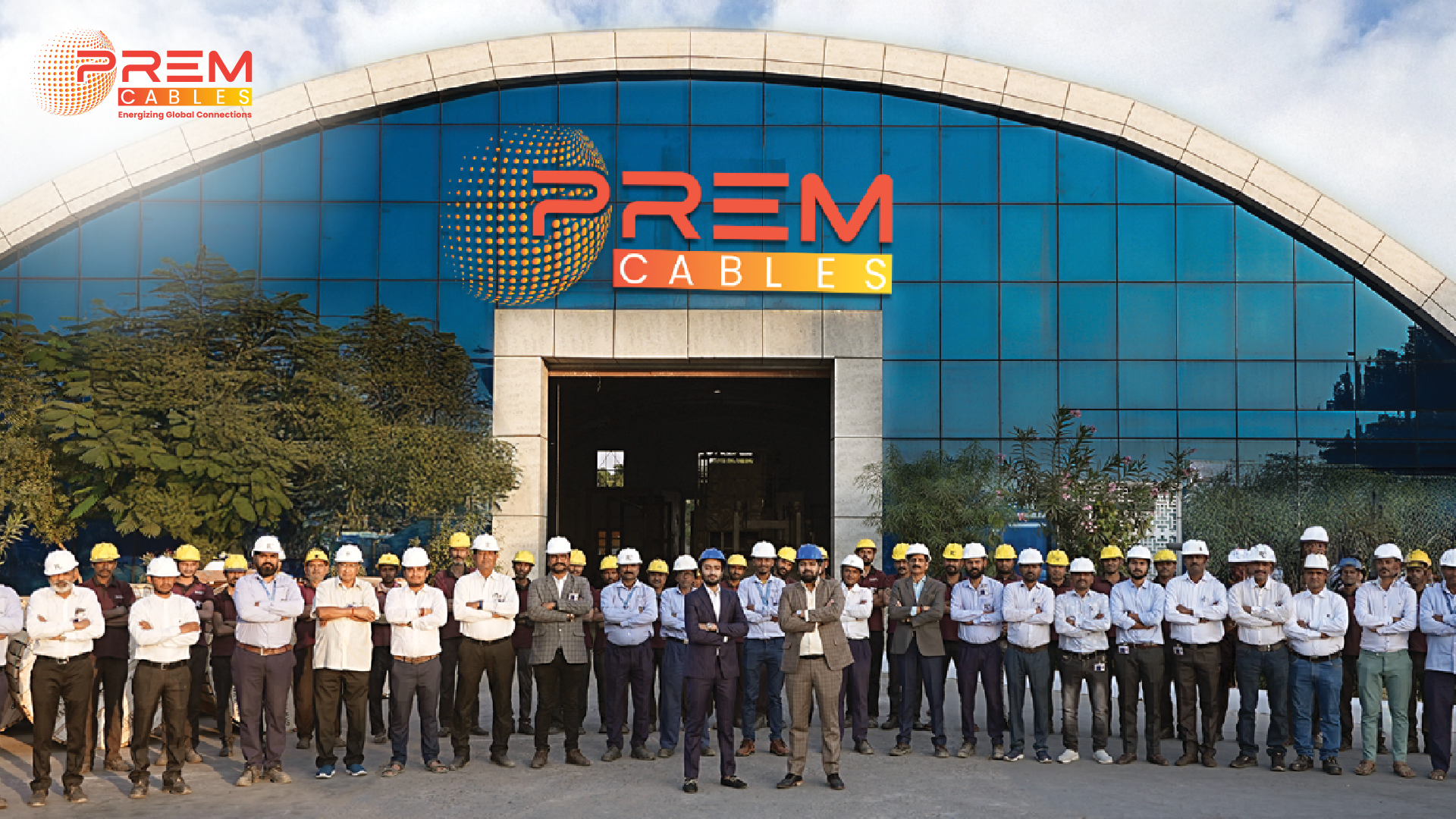
One company that embodies these considerations with proven excellence is Prem Cables, a manufacturer with decades of experience powering India’s industrial and infrastructure sectors.
Industrial electrical systems operate under conditions far more demanding than residential settings. High power loads, continuous operation, exposure to heat, chemicals, and mechanical stress are typical in plants, factories, processing units, and utility grids. A failure in cable performance can not only disrupt operations but also create safety hazards, costly downtime, and expensive repairs.
Industrial cables are engineered for these environments—designed to carry high currents, resist external stresses, and maintain performance over long periods. A competent manufacturer must ensure that cables don’t just meet basic electrical criteria but can perform reliably under real-world industrial stresses.
When evaluating a potential Industrial Cables Manufacturer in India, it’s essential to understand how cost, durability, and performance interplay.
It might be tempting to choose the supplier offering the lowest price per metre of cable, but this often leads to higher long-term expenses. True cost evaluation includes:
A reputable manufacturer, instead of offering the cheapest product, helps customers understand how initial investment transforms into long-term reliability and savings.
Durability in industrial cables means resistance to:
For example, high-tension XLPE cables widely used in industrial power distribution offer excellent thermal stability and mechanical protection due to their cross-linked polyethylene insulation and shielding features.
Durability also reduces the risk of catastrophic failures, fires, or unplanned shutdowns—crucial for high-stakes industrial operations.
Performance refers to a cable’s ability to carry power efficiently, safely, and consistently. Critical performance aspects include:
Industrial cable manufacturers must also test their products rigorously. Certified performance testing—including partial discharge checks, high-voltage withstand tests, and mechanical tests—verifies that cables function as intended under strict conditions.
Here are key evaluation criteria when choosing an Industrial Cables Manufacturer in India:
Ensure the manufacturer follows established standards like IS 7098 for XLPE cables and IS 8130 for conductors. Compliance assures quality, safety, and performance consistency.
The quality of the manufacturing process directly affects the cable output. Manufacturers with integrated, modern facilities and in-house testing labs deliver tighter control over product quality and consistency.Product Range and Customization
Industrial installations vary widely. A good manufacturer should offer a variety of cable types (HT XLPE, LT XLPE, armoured, fire-resistant) and be able to customize cables for specific environmental or electrical performance needs.
Partnering with a manufacturer who provides technical guidance, test certifications, and responsive after-sales service adds value beyond the product itself and helps ensure successful project execution.
Manufacturers with experience in supplying power cables for factories, substations, renewable energy plants, and utility grids tend to offer more reliable solutions that have been field-tested in demanding scenarios.
Reputable manufacturers, like the one mentioned earlier, combine decades of industry knowledge with advanced manufacturing processes to produce industrial cables that strike an optimal balance:
Such a partner becomes more than a supplier—they become a strategic contributor to your project’s success.
Selecting an Industrial Cables Manufacturer in India isn’t just a procurement task; it’s a long-term investment in your project’s safety, performance, and operational continuity.
By evaluating cost in the context of lifecycle value, prioritizing durability in demanding environments, and ensuring performance backed by standards and testing, you can significantly mitigate risk and foster greater project success.
High-quality industrial cables are essential for industrial plants, power networks, infrastructure projects, and renewable energy integration alike. When you partner with a manufacturer that understands the technical, economic, and operational demands of modern industry, you gain both peace of mind and tangible performance advantages.
Industrial power systems typically use LT (Low Tension) and HT (High Tension) XLPE cables, armoured cables, and specialized fire-resistant or chemical-resistant versions depending on the environment and load requirements.
Compliance with standards such as IS 7098 and IEC benchmarks ensures safety, reliability, performance, and suitability for specific voltage and environmental applications.
Industrial cables are built for higher load capacities, greater mechanical and environmental stress resistance, and longer lifecycle expectations compared to standard residential cables.
Cost is influenced by conductor material, insulation type, manufacturing precision, certifications, and the level of environmental protection (like armouring or fire-retardant sheathing).
Yes. Many manufacturers offer customization in conductor size, insulation material, armouring, and sheath type to meet unique industrial requirements.


