
.png)
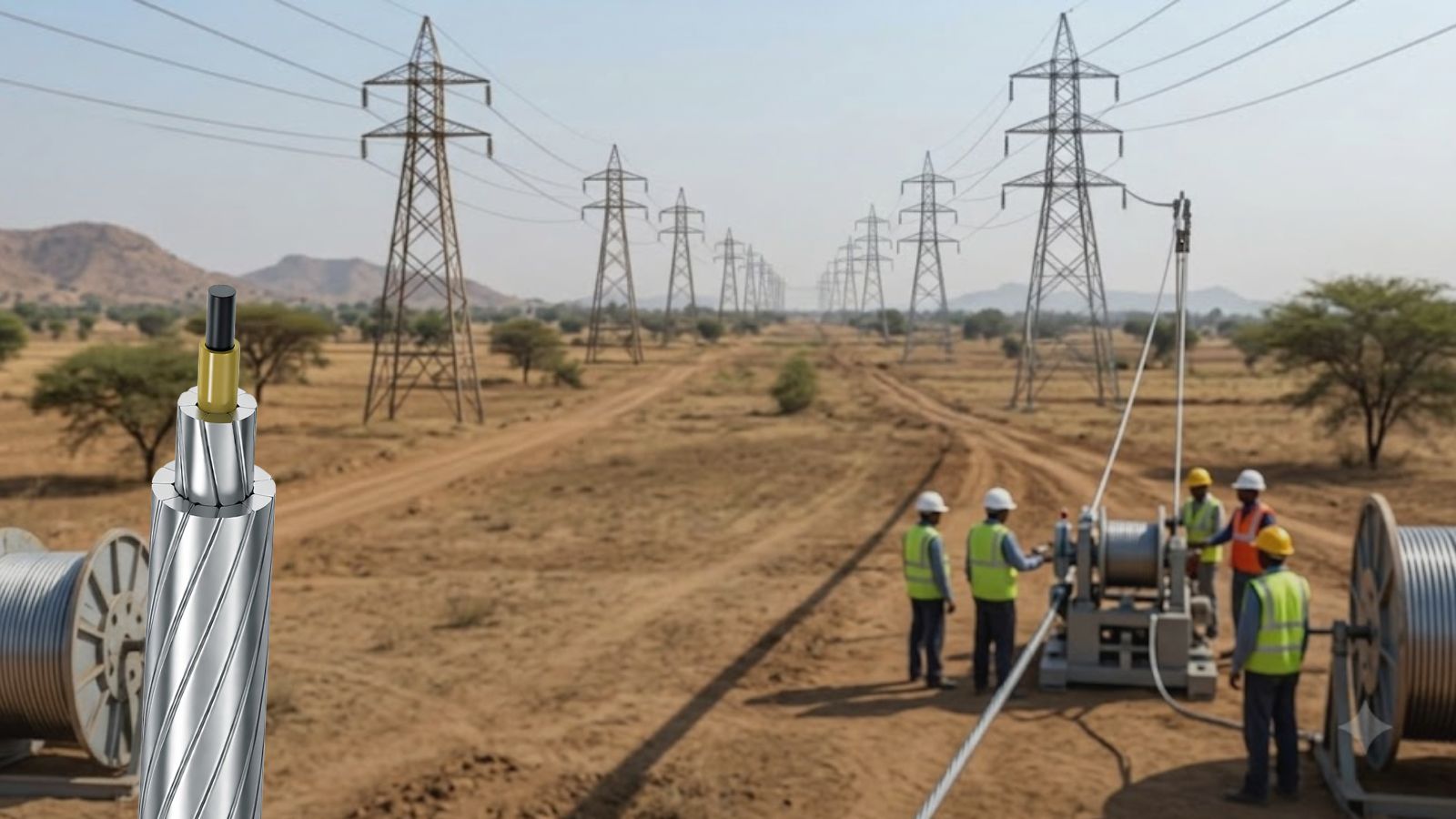
India's power transmission network carries decades of history within its towers and lines. Many corridors built in the 1970s and 1980s still form the backbone of regional grids today. As power demand keeps climbing, utilities face a difficult question. Should they build entirely new transmission corridors, or find a way to extract more capacity from existing infrastructure? This is exactly where an HTLS conductor transmission upgrade becomes the practical answer. At Prem Cables, we manufacture HTLS conductors designed to help utilities modernize ageing corridors without the cost and delay of building new towers from scratch.
Many transmission lines across India were designed decades ago, when power demand looked very different from today. These older conductors, mostly conventional ACSR types, were never built to carry the load levels modern cities and industries now require. As demand grows, utilities find themselves stuck between two costly options.
Building new transmission corridors requires land acquisition, environmental clearances, and years of construction time. In densely populated regions, finding space for new towers has become nearly impossible. This is why an ageing grid conductor upgrade through reconductoring has become the preferred route for most utilities planning capacity expansion.
Reconductoring means replacing the existing conductor on current towers with a higher-capacity alternative. However, simply installing a thicker aluminium conductor often is not enough. Heavier conductors add mechanical load to towers that were never designed to bear it. This mechanical constraint is precisely why HTLS conductors exist.
HTLS stands for High Temperature Low Sag. These conductors are engineered to carry significantly more current while maintaining a similar diameter and weight to the conductors they replace. Because of this design, utilities can boost transmission capacity using the same towers, the same right-of-way, and largely the same foundation structure.
The core of an HTLS conductor plays the biggest role in this performance improvement. Depending on the application, the core may use special steel, invar, or carbon fibre composite material, often clad in aluminium for protection against corrosion. This construction allows the conductor to operate reliably at elevated temperatures, sometimes reaching up to 280°C, while keeping sag levels well within safe limits.
Prem Cables has developed several HTLS variants over the years, including ACSS and TW-shaped conductors, specifically to meet this growing uprating demand. Our HTLS conductor transmission upgrade solutions are manufactured to comply with international standards such as IEC 62420 and ASTM B609, giving utilities confidence in performance consistency across large projects.
The biggest advantage utilities gain from HTLS conductors is additional grid capacity without structural overhaul. Traditional grid expansion often means months of tower construction, land negotiations, and regulatory approvals. HTLS conductors bypass most of these hurdles because they fit onto existing infrastructure.
This matters even more in urban and semi-urban areas, where available right-of-way has shrunk dramatically. Cities that expanded rapidly over the last two decades often built residential and commercial structures right up to existing transmission corridors. Adding new towers in these corridors is rarely feasible anymore.
By improving HTLS conductor grid capacity on current towers, utilities can meet rising demand while avoiding the legal and logistical challenges tied to new right-of-way acquisition. This makes HTLS conductors particularly valuable for metro regions, industrial clusters, and rapidly growing tier-two cities across India.
Prem Cables works with utilities and EPC contractors to identify the right HTLS variant for each specific corridor. Since tower conditions vary significantly across regions, our technical team evaluates existing structural limits before recommending a suitable conductor configuration.
Grid modernization is no longer a future goal. It has become an active priority for state utilities and central transmission agencies working to reduce outages and improve supply reliability. A dependable transmission corridor modernization conductor supply chain plays a central role in keeping these projects on schedule.
Prem Cables manufactures HTLS conductors at its integrated facility in Pipalia Kalan, Rajasthan, where in-house testing laboratories verify mechanical strength and thermal performance before dispatch. Every batch goes through rigorous quality checks aligned with IS, IEC, and ASTM standards, which are commonly referenced in utility tenders across India.
Beyond domestic projects, our conductors also support international infrastructure development, since transmission modernization is not unique to India. Utilities across Asia, Africa, and the Middle East face similar challenges with ageing grids and limited right-of-way, making HTLS technology relevant well beyond Indian borders.
For utilities exploring conductor upgrade options, our HTLS conductors page outlines the technical specifications and standards compliance behind our product range. Contractors working on parallel projects involving conventional overhead lines can also review our ACSR conductor solutions, which remain relevant for corridors that do not yet require HTLS-level capacity gains.
Choosing the right HTLS supplier involves more than comparing specifications on paper. Utilities need a manufacturer who understands the practical challenges of reconductoring live transmission corridors, often while maintaining power supply during installation phases.
Prem Cables brings over six decades of conductor manufacturing experience to every HTLS project. Our engineering team collaborates closely with utility planners to match conductor selection with each corridor's specific thermal rating requirements and structural constraints. This collaborative approach helps avoid costly mismatches between conductor specification and tower capability.
Quality assurance remains non-negotiable throughout our manufacturing process. Machine-vision inspection systems monitor conductor consistency during production, while our laboratory team validates each batch against required tensile strength and conductivity benchmarks. This attention to detail becomes especially important for HTLS conductors, where even minor manufacturing inconsistencies can affect long-term thermal performance.
As India continues expanding renewable energy integration and industrial capacity, transmission corridors will face even greater load pressure in the coming years. Utilities that begin planning their reconductoring strategy now will be better positioned to handle this growth without scrambling for emergency capacity later. To discuss project-specific HTLS conductor requirements, utilities and EPC contractors can reach out to our technical team for detailed specifications and delivery timelines.
India's ageing transmission corridors do not need to become a bottleneck for the country's growing energy demand. With the right HTLS conductor transmission upgrade strategy, utilities can extract significantly more value from infrastructure that already exists, and Prem Cables remains ready to support that transition every step of the way.
HTLS conductors carry higher current at elevated temperatures while keeping sag low, allowing utilities to boost capacity on existing towers. Prem Cables manufactures HTLS conductors specifically designed for this kind of reconductoring work.
Yes. HTLS conductors are designed with similar diameter and weight to conventional conductors, which allows installation on existing towers without major structural changes.
By replacing older conductors with HTLS variants, utilities gain higher transmission capacity on the same infrastructure. Prem Cables supports this approach through conductors built to match various tower load limits.
Prem Cables manufactures HTLS conductors using special steel, invar, and carbon fibre composite cores, depending on the thermal and mechanical requirements of each project.
HTLS conductors generally support higher operating temperatures and improved current-carrying capability compared to standard ACSR conductors, making them suitable for capacity uprating projects.
Prem Cables manufactures HTLS conductors in compliance with IEC 62420, IEC 62219, ASTM B609, and other applicable IS and utility specifications.
Yes. HTLS conductors work well in urban areas where right-of-way is limited, since they increase capacity without requiring additional land or new tower construction.
Utilities and EPC contractors can contact the Prem Cables technical team directly through the company website to receive project-specific HTLS conductor specifications and quotes.


