
.png)
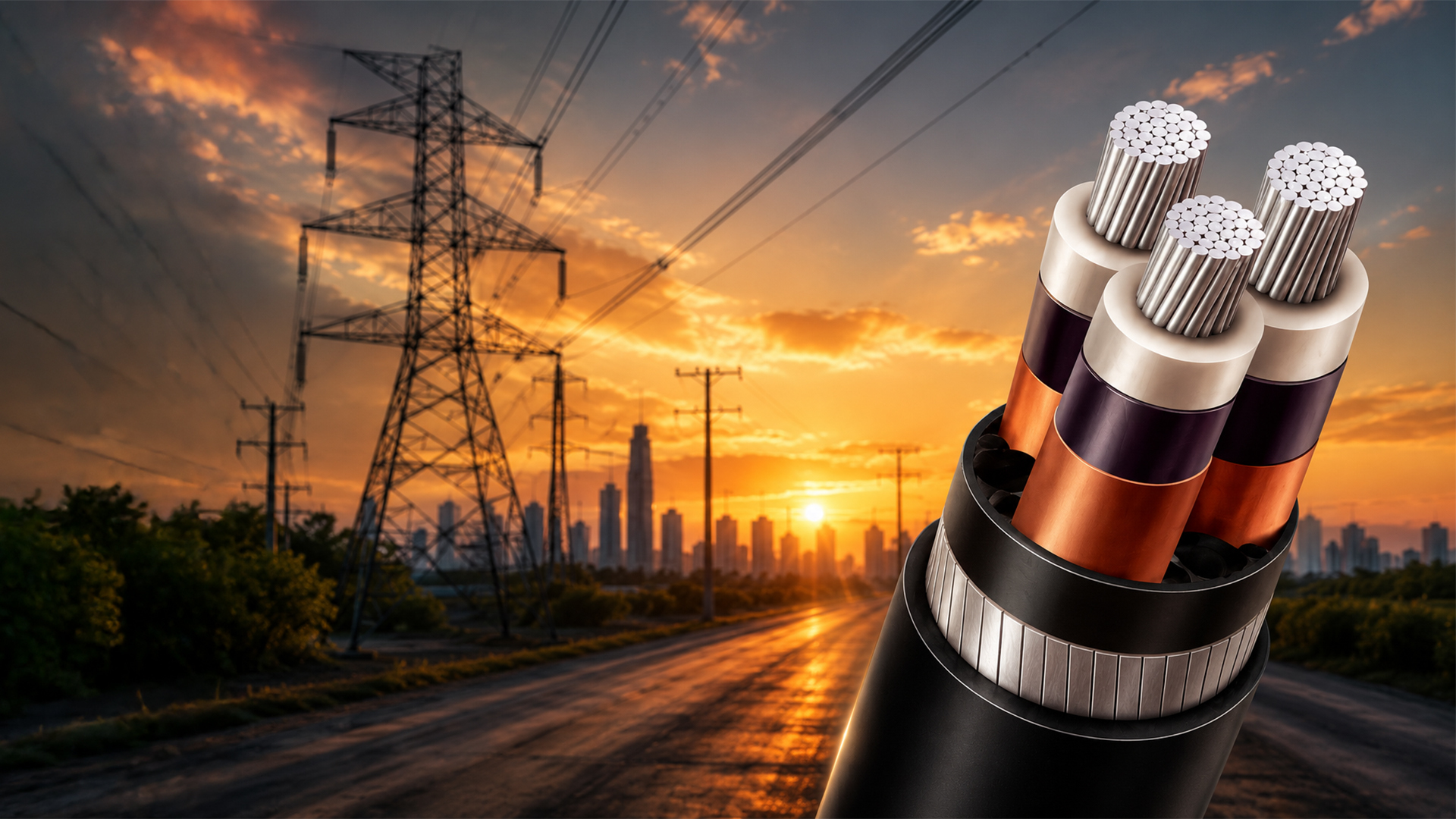
Power distribution networks face constant pressure from tree contact, vegetation growth, wildlife interference, and harsh weather. Covered conductors solve many of these problems by adding a protective insulating layer over the conductor, reducing faults and improving safety on medium-voltage overhead lines. As utilities and EPC contractors increasingly adopt covered conductors for forested, coastal, and storm-prone regions, choosing the right manufacturer becomes critical to the long-term performance of every project.
This blog explains what covered conductors are, why they matter for modern distribution networks, what features separate high-performance products from average ones, and how to evaluate manufacturers before placing your next order.
A covered conductor combines a traditional aluminium or alloy conductor core with an insulating outer layer, typically made from medium-voltage grade XLPE. This covering acts as a protective barrier between the live conductor and its surroundings, significantly reducing the risk of faults caused by branch contact, bird and animal interference, or accidental contact during maintenance work.
Distribution utilities increasingly prefer covered conductors over bare conductors for medium-voltage networks because the added protection translates directly into fewer outages and safer operations. As India expands its rural and semi-urban distribution infrastructure, covered conductors play a growing role in reducing fault-related downtime across forested corridors, coastal belts, and densely vegetated rural feeders.
Not all covered conductors deliver the same level of protection and reliability. A few core features determine how well a covered conductor performs over its operational life. High thermal and electrical stability allows the conductor to handle heavy loading and elevated ambient temperatures without degrading insulation performance over time. An extruded longitudinal water-blocking layer prevents moisture ingress along the conductor length, which protects against corrosion and insulation breakdown in humid or coastal climates.
The outer covering should resist UV exposure, tracking, and weathering, since conductors installed in desert heat, coastal humidity, or high-pollution zones face constant environmental stress. Mechanical strength also matters significantly, as conductors with high tensile strength handle long overhead spans with reduced sag, maintaining consistent clearance even during windy or stormy conditions.
The protective covering on these conductors directly addresses some of the most common causes of distribution-line faults. Tree branches brushing against bare conductors often trigger flashovers, especially during storms or high winds, but the insulating layer on covered conductors significantly reduces this risk. Birds, monkeys, and snakes frequently cause phase-to-phase faults on bare overhead lines, and covered conductors minimize these animal-induced outages by adding a barrier between the live core and external contact points.
Moisture and vegetation-related flashovers, which spike during monsoon season in many parts of India, also decrease substantially with covered conductors. Beyond reducing outages, this protective layer lowers the risk of accidental contact during maintenance or in areas where overhead lines run close to buildings, trees, or human activity, making covered conductors a meaningful safety upgrade for utilities and communities alike.
Covered conductors serve specific use cases where bare conductors struggle to maintain reliability. Medium-voltage overhead distribution networks operating at 11 kV, 22 kV, or 33 kV commonly use covered conductors to improve fault tolerance across long feeder lines. Forested and high-risk terrain, where vegetation growth constantly threatens bare conductors, benefits significantly from the added insulation, since utilities reduce the frequency of vegetation-related outages and the cost of repeated tree-trimming operations.
Urban and rural MV feeders that require improved safety standards also increasingly specify covered conductors, particularly in areas where overhead lines pass close to residential zones, schools, or busy roads. As distribution utilities prioritize reliability metrics and reduced outage frequency, covered conductors continue to gain adoption across these applications.
Selecting the Best Covered Conductor Manufacturer for your project requires looking beyond price and evaluating manufacturing depth, testing capability, and compliance with relevant standards. A manufacturer that produces its own conductor cores, whether AAAC, ACSR, AL7, or AL59, maintains better control over the base material quality that ultimately determines conductivity and mechanical strength.
In-house extrusion capability for the water-blocking and outer insulation layers ensures that the covering bonds properly to the conductor and performs consistently across production batches. The best manufacturers also operate dedicated testing laboratories that verify thermal stability, dielectric strength, UV resistance, and mechanical performance before products leave the factory. This level of vertical integration reduces variability and gives project planners confidence that every reel of conductor performs to the same specification.
Manufacturers with experience across diverse geographies, including coastal, desert, and forested regions, bring practical knowledge of how covered conductors perform under different environmental stresses, which proves invaluable when specifying products for region-specific challenges.
Compliance with recognized standards forms the foundation of a reliable covered conductor procurement decision. IS 398 Part-II and Part-IV cover Indian requirements specific to covered conductors, while IEC 61089 addresses the design and construction of overhead conductors more broadly. BS EN 50182 and EN 50397-1 specify technical requirements for covered and non-compacted conductors and frequently appear in utility tender specifications.
Beyond product-specific standards, check whether the manufacturer holds ISO 9001:2015 certification, which confirms a documented quality management system across manufacturing operations. Conductors manufactured under these combined standards typically arrive with technical datasheets covering voltage ratings, short-circuit temperature limits, and available sizes, giving project engineers the information they need to match products precisely to network requirements.
Finding the Best Covered Conductor Manufacturer in India starts with mapping your project's technical requirements against a manufacturer's product range and manufacturing capability. Confirm that the manufacturer offers covered conductors across the voltage ranges and conductor sizes your project needs, typically spanning 6.6 kV to 33 kV and conductor cross-sections from around 31.60 sq.mm to 241 sq.mm.
Request test certificates and ask about the manufacturer's in-house testing infrastructure, since this indicates how thoroughly products get validated before dispatch. Review the manufacturer's track record with utility and EPC projects, particularly any experience supplying conductors for forested, coastal, or high-vegetation regions similar to your project site. Finally, evaluate production capacity and delivery timelines, since large distribution projects often require phased deliveries that match installation schedules across multiple feeder sections.
Manufacturers with decades of experience in conductor and cable production bring accumulated knowledge about how materials behave across different climates and load conditions over time. This experience often translates into better alloy selection, more durable insulation formulations, and manufacturing processes refined through years of field feedback.
Robust testing infrastructure complements this experience by catching issues before products reach the field. AI-assisted quality control systems, advanced testing laboratories staffed by specialist engineers, and rigorous batch-level inspections all contribute to consistent product performance. For covered conductors specifically, where insulation integrity directly determines fault prevention, this combination of experience and testing rigor makes a measurable difference in long-term network reliability.
Among manufacturers supplying India's distribution sector, Prem Cables brings over six decades of conductor manufacturing experience, integrated production facilities in Rajasthan, and ISO 9001:2015-certified processes backed by advanced in-house testing laboratories. Its conductor range, including AAAC, ACSR, AL7, and AL59 cores used in MVCC production, supports distribution projects across diverse Indian terrains as well as international markets.
Covered conductors play an increasingly important role in reducing outages and improving safety across India's medium-voltage distribution networks. Selecting the right manufacturer determines whether your project benefits fully from this technology or faces avoidable performance issues down the line. By evaluating manufacturing depth, testing infrastructure, standards compliance, and proven experience across challenging environments, you set your power distribution project up for long-term reliability and success.
A covered conductor adds an insulating layer, usually medium-voltage grade XLPE, over a traditional aluminium or alloy conductor core. This covering reduces the risk of faults from tree contact, animal interference, and moisture, making it more reliable than a bare conductor for overhead distribution lines in vegetation-prone or high-risk areas.
Covered conductors used in Indian distribution networks should comply with IS 398 Part-II and Part-IV, along with international references such as IEC 61089, BS EN 50182, and EN 50397-1. ISO 9001:2015 certification for the manufacturing process adds an additional layer of quality assurance for procurement decisions.
Covered conductors reduce outages by preventing flashovers caused by branch contact, bird and animal interference, and vegetation-related faults, all common issues with bare overhead conductors. The protective outer layer also lowers the risk of accidental contact, improving overall safety for both utility staff and nearby communities.
Covered conductors typically cover voltage ratings from 6.6 kV to 33 kV, suitable for most medium-voltage distribution networks. Conductor sizes generally range from around 31.60 sq.mm to 241 sq.mm, available in both single and multi-strand constructions to match different load and span requirements.
Check the manufacturer's in-house production and testing capabilities, certifications such as ISO 9001:2015, and compliance with relevant IS and IEC standards for covered conductors. Reviewing their experience with projects in similar terrains, such as coastal, forested, or high-vegetation areas, also helps confirm the product will perform reliably under your specific site conditions.


