
.png)
Every transmission utility eventually faces the same constraint. Power demand keeps rising, but the towers carrying electricity across the grid were built decades ago with a fixed capacity in mind. Rather than tearing down old infrastructure and starting fresh, many utilities are now turning to a smarter solution. HTLS conductor power transfer capacity improvements allow existing towers to carry significantly more current without any structural rebuild. At Prem Cables, we manufacture HTLS conductors engineered to deliver exactly this kind of capacity boost, helping utilities meet rising demand without the delays and costs tied to new tower construction.
Conventional conductors face a temperature limit beyond which they begin to sag excessively, risking dangerous ground clearance violations. This thermal ceiling directly restricts how much current a conductor can safely carry, since higher current generates more heat during operation. Once a line reaches this limit, utilities traditionally had only one option, which was building additional towers to distribute the load.
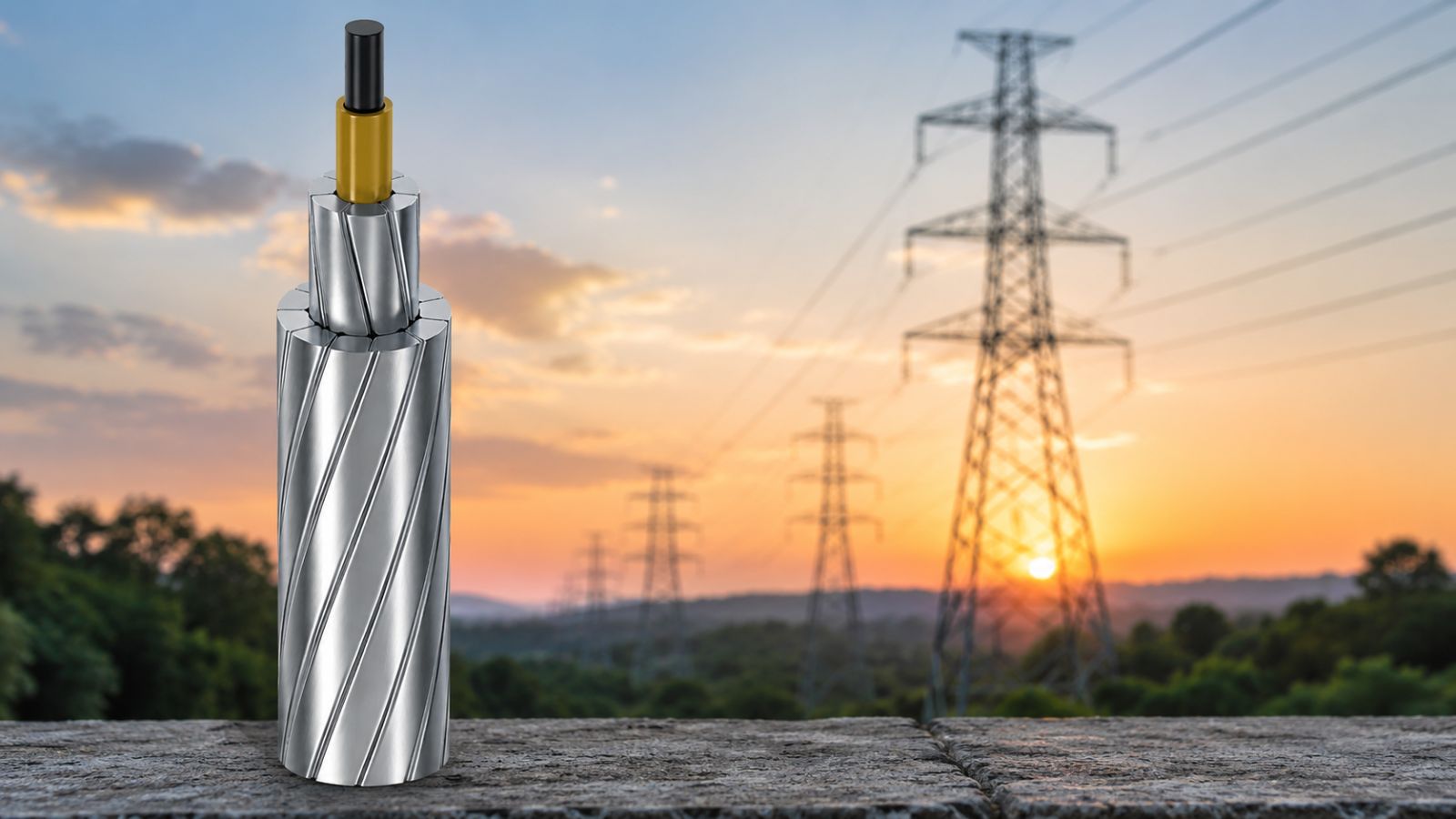
HTLS conductor without new tower technology removes this restriction by changing the core material inside the conductor itself. Instead of relying on standard galvanized steel, HTLS conductors use special steel, invar, or carbon fibre composite cores that maintain structural integrity even at much higher operating temperatures. This allows the conductor to carry substantially more current while keeping sag within safe operational limits.
Prem Cables manufactures HTLS conductors specifically designed around this principle. Our conductor cores are clad in aluminium for corrosion protection, while the outer aluminium strand layers maintain low DC resistance for efficient power flow even under increased thermal loading.
Every overhead conductor operates within a defined temperature range before mechanical properties begin to degrade. Standard ACSR conductors typically reach their thermal limit around 75°C to 90°C, beyond which continued heating causes excessive elongation and dangerous sagging between towers.
Uprating transmission line conductor projects work by replacing this standard conductor with an HTLS variant capable of operating at much higher temperatures, often exceeding 200°C depending on the core material selected. Because the core material resists thermal degradation at these elevated temperatures, the conductor can carry higher current without the sag problems that would occur in a conventional design.
This temperature tolerance translates directly into higher power transfer capacity. Since current-carrying capacity and operating temperature are closely linked, a conductor that tolerates higher heat can simply transmit more electricity through the same physical space. Prem Cables engineers its HTLS conductors to maximize this relationship, giving utilities meaningful capacity gains without altering the fundamental conductor diameter or weight.
Replacing a conductor costs a fraction of what building new transmission infrastructure requires. An existing tower conductor upgrade avoids expenses tied to land acquisition, environmental clearances, and foundation construction, all of which add significant time and cost to greenfield transmission projects.
Because HTLS conductors are engineered to match the diameter and weight profile of the conductors they replace, most existing towers can support the upgrade without structural reinforcement. This compatibility makes HTLS conductors particularly attractive for utilities working within tight capital budgets or facing regulatory pressure to expand capacity quickly.
Urban and semi-urban corridors benefit especially from this approach. As cities have expanded, available right-of-way near existing transmission lines has often disappeared under new construction. Building additional towers in these congested corridors is frequently impossible, which makes existing tower conductor upgrade projects using HTLS conductors one of the only viable paths forward.
Manufacturing consistency plays a critical role in achieving reliable capacity gains. Even small variations in core composition or strand alignment can affect how a conductor performs under sustained high-temperature operation. Prem Cables addresses this through precision manufacturing processes that maintain tight tolerances across every production batch.
Our HTLS conductors undergo thorough testing at our in-house laboratory in Pipalia Kalan, Rajasthan, where thermal performance and mechanical strength are verified before dispatch. This testing ensures utilities receive conductors that deliver the promised HTLS conductor power transfer capacity improvements consistently across an entire project, not just in isolated test samples.
We also work directly with utility engineering teams to select the appropriate HTLS variant for each specific project. Since different core materials offer varying thermal tolerances and mechanical characteristics, choosing the right configuration depends heavily on the existing tower's structural limits and the target capacity increase needed. This consultative approach helps utilities avoid costly mismatches between conductor selection and project goals.
For utilities exploring related conductor options, our complete HTLS conductor range outlines the various core materials and specifications available for different uprating scenarios. Projects that require alloy-based strength for specific terrain challenges can also review our AL 59 conductor solutions, which offer an alternative approach for long-span sections within the same transmission corridor.
Renewable energy integration has added new urgency to capacity uprating projects across India. Solar and wind installations often connect to sub-transmission lines that were never designed to handle their variable but substantial output. Rather than waiting years for new evacuation infrastructure, utilities increasingly turn to HTLS conductors to accommodate this additional load on existing routes.
Industrial growth has created similar pressure on urban transmission corridors, where manufacturing hubs and commercial developments draw increasingly higher loads from ageing infrastructure. HTLS conductor upgrades allow utilities to respond to this growth without the multi-year timelines associated with entirely new transmission construction.
Prem Cables has manufactured conductors since 1964, and our expertise in HTLS technology reflects decades of understanding how India's grid infrastructure needs to evolve. Our production facility operates under IS, BS, IEC, and ASTM compliance, ensuring every HTLS conductor batch meets the technical benchmarks utilities require for large-scale uprating tenders.
As India's power demand continues its upward trajectory, more transmission corridors will need capacity improvements without the option of building entirely new infrastructure. Utilities and EPC contractors evaluating their next uprating project can connect with our technical team to discuss HTLS conductor specifications suited to their specific tower and capacity requirements.
Increasing grid capacity no longer requires the years of planning that new tower construction demands. Through HTLS conductor power transfer capacity improvements, utilities can extract significantly more value from infrastructure they already own, and Prem Cables remains committed to supporting that transition with reliable, well-tested conductor solutions.
HTLS conductors use special steel, invar, or carbon fibre composite cores that tolerate higher operating temperatures. Prem Cables manufactures HTLS conductor power transfer capacity solutions that carry more current while keeping sag within safe limits on existing towers.
HTLS conductors typically operate at higher temperatures than standard ACSR conductors, often exceeding 200°C depending on the core material, allowing significantly greater current-carrying capacity.
Yes. HTLS conductor without new towers technology matches the diameter and weight of conventional conductors, allowing installation on existing towers without structural reinforcement in most cases.
An existing tower conductor upgrade avoids land acquisition, environmental clearances, and foundation costs, making it significantly faster and more cost-effective than new transmission construction.
Prem Cables manufactures HTLS conductors using special steel, invar, and carbon fibre composite cores, each offering different thermal and mechanical performance for uprating transmission line conductor projects.
Yes. HTLS conductors help utilities accommodate additional load from solar and wind installations on existing sub-transmission lines without building new evacuation infrastructure.
Prem Cables tests every HTLS conductor batch at its in-house laboratory for thermal performance and mechanical strength, ensuring consistent power transfer capacity across large orders.
Utilities and EPC contractors can contact the Prem Cables team directly through the company website to discuss HTLS conductor specifications and project-specific uprating requirements.


