
.png)
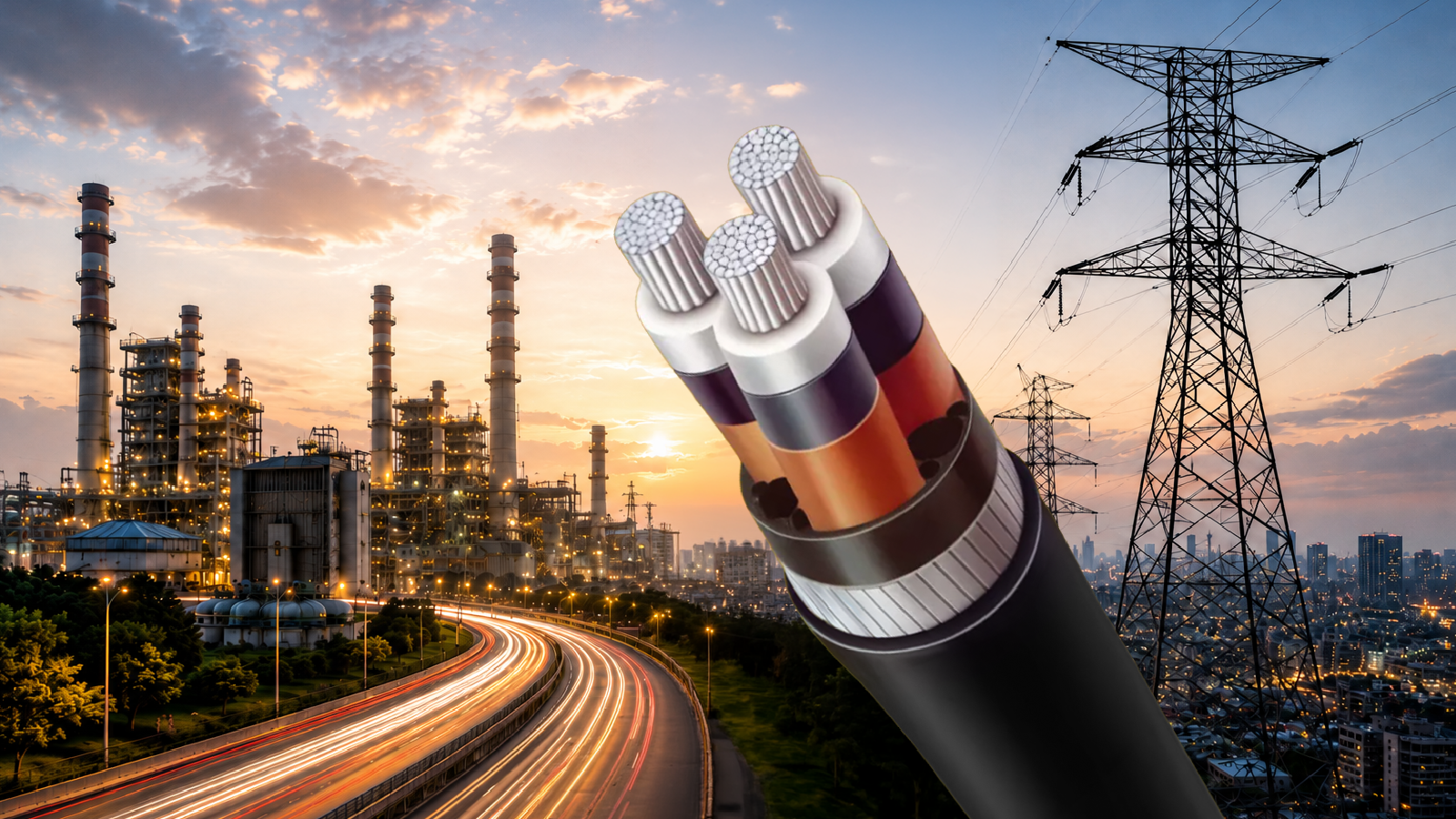
Electricity distribution companies across India depend on strong cable infrastructure to keep power flowing without interruption. Every substation, feeder line, and local grid connection relies on cables that can handle daily load changes, weather stress, and years of continuous service. Choosing the right manufacturer decides how well a distribution network performs over the next decade.
Power transmission companies and utility contractors often search for suppliers who combine technical expertise with proven field performance. This guide explains what separates a dependable cable manufacturer from an average one, and it shows how the right choice protects both project timelines and long-term operational costs.
Distribution projects demand more than a product catalog. A manufacturer needs manufacturing depth, testing capability, and a track record across real grid conditions.
Utilities look for suppliers who understand voltage drop calculations, insulation resistance, and thermal performance under load. A cable that performs well in a lab test but fails during monsoon humidity or peak summer load creates costly downtime for distribution companies.
Strong manufacturers also maintain in-house testing labs. They verify conductor resistance, insulation thickness, and short circuit ratings before a single reel leaves the factory. This reduces field failures and keeps maintenance budgets predictable for utilities managing hundreds of kilometers of network.
Every LV power cable manufacturer in India shortlist should start with certification and compliance. Cables used in distribution projects must meet IS, IEC, and BS standards, since these define minimum safety and performance benchmarks accepted by state electricity boards and private utilities.
Production capacity matters just as much. A manufacturer running two or more integrated plants can handle bulk orders without delaying rollout schedules. Distribution projects often run on tight commissioning deadlines, so consistent supply becomes a deciding factor during vendor selection.
Material quality plays an equally important role. High-purity EC-grade aluminum and properly cross-linked XLPE insulation extend cable life and reduce transmission losses. Buyers should ask for raw material test certificates rather than relying only on finished product claims.
Field support adds another layer of value. Manufacturers offering technical guidance during installation help contractors avoid common errors like incorrect bending radius or improper jointing, both of which shorten cable lifespan considerably.
You can review a detailed product range for LT XLPE power cables built specifically for underground and overhead distribution networks.
Aluminum remains the preferred conductor material for most distribution-grade cables. It offers a strong strength-to-weight ratio, lower material cost compared to copper, and excellent conductivity when processed correctly.
Aluminum Cable Manufacturers in India serving the utility sector typically produce a wide range of conductors, including AAC, ACSR, and AAAC, each suited to different span lengths and load conditions. AAC works well for short urban spans, while ACSR and AAAC handle longer rural stretches where mechanical strength becomes critical.
Rural electrification schemes and metro rail projects both rely heavily on these conductor types. A manufacturer with alloy grade production capability can supply HTLS and AL59 conductors as well, giving utilities more flexibility when upgrading older transmission corridors without rebuilding tower infrastructure from scratch.
Buyers exploring conductor options can check the specifications for AAC conductors and ACSR conductors before finalizing a bill of materials for a new distribution line.
A cable factory's process controls determine how consistently it delivers quality across large orders. Automated extrusion lines reduce insulation thickness variation, while machine vision inspection systems catch surface defects that manual checks often miss.
ISO 9001:2015 certification confirms that a manufacturer follows documented quality management practices at every production stage. This certification, combined with routine third-party audits, gives distribution companies confidence that each batch matches the tested prototype.
Testing laboratories equipped with high-voltage test setups, tensile strength machines, and environmental chambers allow manufacturers to simulate years of field stress before dispatch. This proactive testing approach prevents failures that would otherwise surface only after installation, when repair costs rise sharply.
Manufacturers who publish technical datasheets and test reports openly tend to build stronger trust with engineering teams. Transparency during the procurement stage often predicts how a supplier will behave during warranty claims later.
Selecting a cable partner starts with matching technical specifications to project requirements. Voltage grade, conductor size, and insulation type should align with load calculations prepared by the project's electrical engineers.
Delivery timelines deserve equal attention. Utilities should confirm a manufacturer's current production capacity against the project's rollout schedule, since delayed cable supply can push commissioning dates by months on large distribution projects.
Price comparisons should never happen in isolation from quality data. A slightly higher upfront cost often pays off through lower failure rates and reduced maintenance visits across a cable's operational life, which typically spans twenty-five years or more.
References from past utility clients offer practical insight that specification sheets cannot capture. Speaking with existing customers about installation support, replacement turnaround, and after-sales service helps distribution companies avoid vendors who look strong on paper but underperform on site.
Readers planning a broader network upgrade may also find it useful to review related coverage on the company's cable industry blog for additional technical insights on conductor selection.
Prem Cables has supported India's power distribution sector since 1964, growing from a single production unit into a manufacturer operating two integrated plants with a combined annual capacity exceeding 150,000 metric tonnes. The company serves electricity boards, EPC contractors, and industrial clients across Asia, Africa, and the Middle East.
Its manufacturing process combines AI-assisted quality checks with ISO 9001:2015-certified procedures, ensuring every conductor and cable batch meets IS, BS, and IEC benchmarks. This consistency has made the company a preferred partner for rural electrification schemes, railway electrification, and urban grid expansion projects.
Selecting a dependable LV cable manufacturer protects electricity distribution projects from avoidable delays and long-term performance issues. Utilities benefit most when they evaluate certification, testing infrastructure, production capacity, and field support together rather than focusing on price alone.
A manufacturer that combines decades of experience with modern quality systems gives distribution companies the reliability their networks demand. Careful vendor evaluation today prevents costly replacements and service interruptions years down the line.
LV cables operate at voltages up to 1000 volts and typically serve local distribution networks, residential connections, and industrial feeders. HV cables handle higher voltages for long-distance transmission between substations, requiring thicker insulation and stricter testing protocols.
Aluminum conductors remain the standard choice for most distribution-grade cables due to their favorable strength-to-weight ratio and lower cost compared to copper. They deliver reliable conductivity when manufactured to proper purity standards.
Quality LV cables installed correctly and maintained properly generally last twenty-five to thirty years. Lifespan depends on insulation quality, installation practices, and environmental exposure during service.
Look for ISO 9001:2015 certification along with compliance with IS, IEC, and BS standards. These certifications confirm consistent quality control and adherence to safety benchmarks required for utility-scale projects.
Yes, properly insulated aluminum cables with XLPE or PVC sheathing work well in underground distribution systems. They offer strong mechanical protection and stable performance across varying soil and moisture conditions.


