
.png)
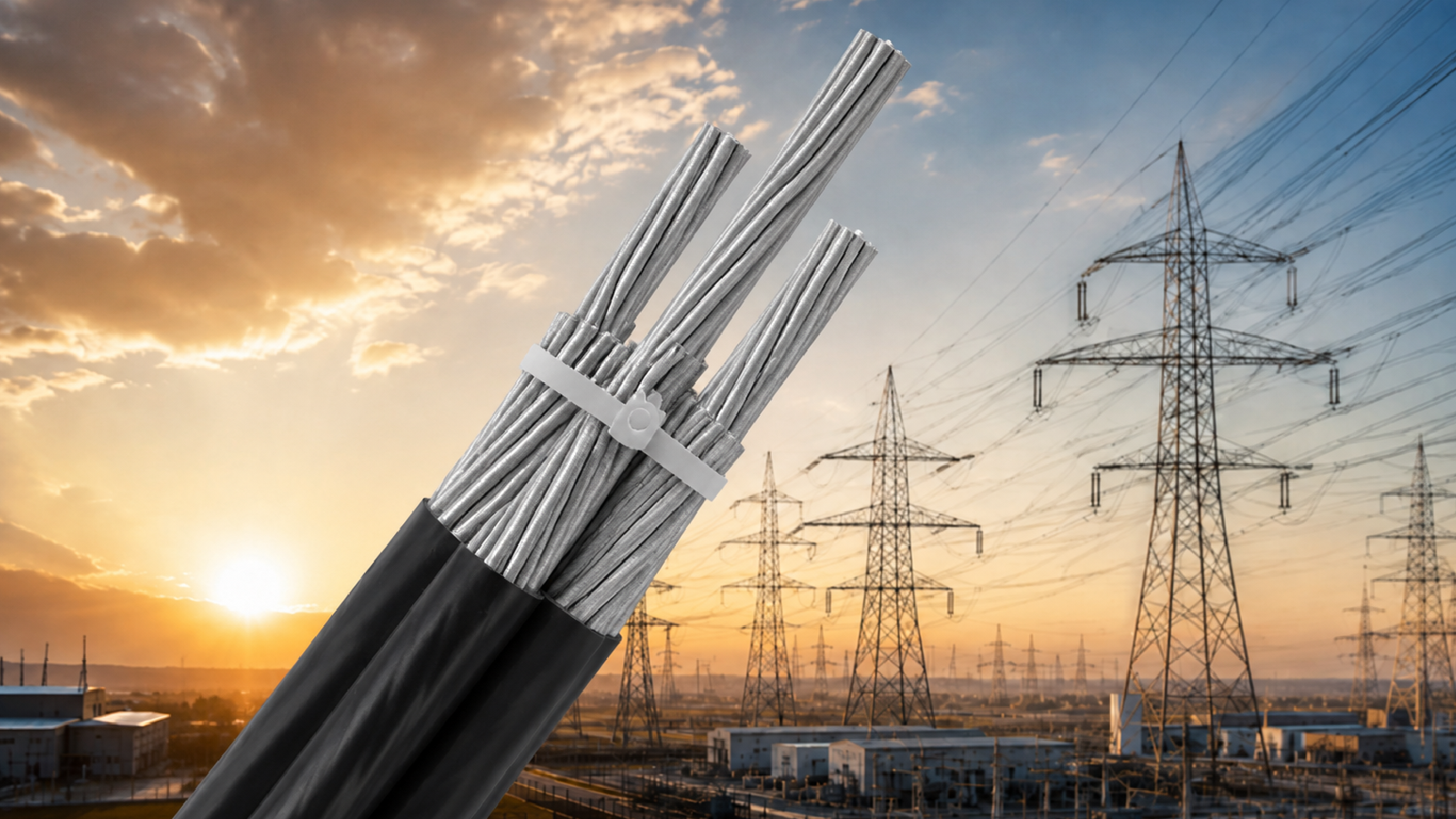
India's power sector is expanding at a pace that few industries can match. New substations, renewable energy parks, smart city grids, and industrial corridors are being built every year, and each of these projects depends on one thing that rarely gets the spotlight it deserves: the cable running beneath the surface or strung across the towers. Choosing the right manufacturer for these cables is not a small decision. It affects safety, energy loss, maintenance cost, and the lifespan of the entire network.
This blog looks at what makes a cable manufacturer truly reliable for power transmission and distribution work, why quality standards matter so much in this industry, and how buyers can evaluate a supplier before signing a purchase order.
Power transmission is not a simple job of moving electricity from one point to another. High voltage lines carry enormous current over long distances, often through harsh weather, humid coastal air, dusty industrial belts, and freezing mountain passes. A cable that performs well in a lab test can still fail in the field if it was not engineered for real-world stress.
Distribution networks bring their own challenges too. These lines feed directly into homes, factories, hospitals, and commercial buildings, so even a short outage creates a ripple effect. Cables used here need consistent conductivity, strong insulation, and resistance to corrosion since they are expected to function for decades without major replacement.
This is why utilities, EPC contractors, and private power companies look closely at manufacturing processes before they finalize a vendor. A cable is only as good as the raw material, the winding precision, and the testing that goes into it.
Choosing an established industrial cable manufacturer in India involves checking a few non-negotiable factors. Certification is the first filter. ISO 9001:2015 certification, along with compliance with ISI, BS, and IEC standards, shows that a manufacturer follows a documented and repeatable quality process rather than relying on guesswork.
Manufacturing infrastructure is the second factor worth studying. Plants that run automated production lines with machine vision quality checks catch defects early, long before a faulty batch reaches a job site. In-house testing laboratories add another layer of assurance, since every reel of cable can be verified for conductivity, tensile strength, and insulation resistance before it leaves the factory.
Experience also plays a quiet but important role. A manufacturer that has supplied conductors and cables for railway electrification, metro projects, rural grid expansion, and industrial complexes has already faced the practical problems that come with different terrains and climates. That experience translates into fewer surprises during installation and a longer service life for the buyer.
Aluminum has become the material of choice for most transmission and distribution projects, and for good reason. It is significantly lighter than copper, which reduces the load on transmission towers and support structures. It is also more cost effective at scale, which matters greatly for large government tenders and utility-scale projects where budgets are closely watched.
Reputed aluminum cable manufacturers combine high-purity EC-grade aluminum with alloy blends such as AL59 and AAAC to improve strength without compromising conductivity. These alloy conductors are particularly useful for long-span rural lines and high-temperature, low-sag applications, where the cable needs to resist stretching under heavy electrical load.
For urban and industrial settings, LT and HT XLPE power cables remain the standard choice because of their superior insulation and fire-resistant properties. Explore the LT XLPE Power Cables range to understand how these cables are built for continuous duty in commercial buildings, malls, and metro infrastructure.
A good cable manufacturer does not build a single product and market it everywhere. Different terrains demand different engineering choices.
Urban networks need cables that can be laid underground with minimal disruption and still handle the dense load of high-rise buildings and smart city infrastructure. Railways and metro corridors require conductors built for continuous vibration, fast electrification timelines, and strict safety codes.
Rural and remote regions call for overhead conductors that can span long distances without intermediate support, since installing towers every few hundred meters is often not practical in agricultural or hilly terrain. ACSR conductors are commonly used here because of their proven strength-to-weight ratio.
Industrial complexes, refineries, and manufacturing hubs need cables that can handle continuous high loads with almost zero downtime, since a single failure can halt an entire production line. This is where heavy-duty conductors and specialized HTLS solutions come into play. HTLS Conductors are engineered specifically for high-temperature, low-sag performance in demanding industrial and transmission environments.
Testing is where manufacturers either earn or lose trust. Reputable factories run every batch through dimensional checks, electrical resistance testing, tensile strength testing, and insulation resistance testing before dispatch.
AI-assisted quality control systems have started replacing manual inspection in leading facilities. Machine vision cameras scan every meter of cable for surface defects, inconsistent stranding, or insulation gaps that a human eye could easily miss. This shift has made zero-defect manufacturing a realistic target rather than a marketing claim.
Buyers should always ask for test certificates and, where possible, request a factory audit before committing to a large order. A manufacturer confident in its process will never hesitate to open its doors for inspection.
Selecting a cable supplier should never be based on price alone. A cheaper cable that fails within a few years costs far more in replacement, downtime, and safety risk than a slightly higher-priced cable built to last.
Buyers should evaluate production capacity to confirm the manufacturer can meet project timelines without delays. They should review past project references, particularly for similar terrain or voltage requirements. They should also confirm export experience if the project involves international standards, since manufacturers who already comply with ASTM, SS, or global IEC benchmarks tend to have tighter internal quality controls.
Prem Cables has built its reputation over six decades by focusing on exactly these fundamentals, combining alloy-based conductor engineering with automated production and rigorous in-house testing to serve urban, rural, railway, and industrial power networks across India and beyond.
Reading independent case studies and technical comparisons can also help buyers make an informed decision. For a deeper look at conductor selection criteria, this comparison of AAC, ACSR, and AAAC conductors breaks down the practical differences between conductor types for different voltage and terrain requirements.
India's push toward renewable energy, rural electrification, and smart grid modernization means the demand for high-quality transmission and distribution cables will only keep growing. Government schemes aimed at strengthening the national grid, along with private investment in industrial corridors, are creating steady order books for manufacturers who can deliver consistent quality at scale.
For utilities and EPC companies planning their next project, partnering with a manufacturer that combines decades of field experience, certified processes, and modern testing infrastructure is the safest path forward. The right cable does more than carry current. It protects an entire network's uptime, safety record, and long-term operating cost.
Learn more about manufacturing standards and ongoing projects on the About Us page, where six decades of conductor and cable engineering are documented in detail.
What is the difference between AAC, ACSR, and AAAC conductors?
AAC conductors use pure aluminum and suit short-span urban distribution. ACSR conductors add a steel core for extra strength on long transmission spans. AAAC conductors use aluminum alloy for a balance of strength, weight, and corrosion resistance, making them popular for coastal regions.
Why is aluminum preferred over copper for power transmission cables?
Aluminum is lighter, more cost-effective, and easier to handle over long spans. It reduces the load on transmission towers while still delivering strong conductivity, which makes it the practical choice for most utility-scale transmission and distribution projects across India.
What certifications should a good cable supplier hold?
Look for ISO 9001:2015 certification along with compliance with ISI, BS, and IEC standards. These certifications confirm that the manufacturer follows documented quality processes and that every batch undergoes proper testing before it reaches a project site.
How long do industrial power cables typically last?
Well-manufactured XLPE and aluminum alloy cables can last twenty-five to forty years under normal operating conditions. Actual lifespan depends on installation quality, load consistency, environmental exposure, and how closely the cable specification matches the project's electrical demands.
Can one manufacturer supply cables for both urban and rural power projects?
Yes. Manufacturers with diverse product ranges, including LT and HT XLPE cables for urban grids and ACSR or AAAC conductors for rural spans, can serve both segments from the same facility, simplifying vendor management for large multi-terrain projects.


