
.png)
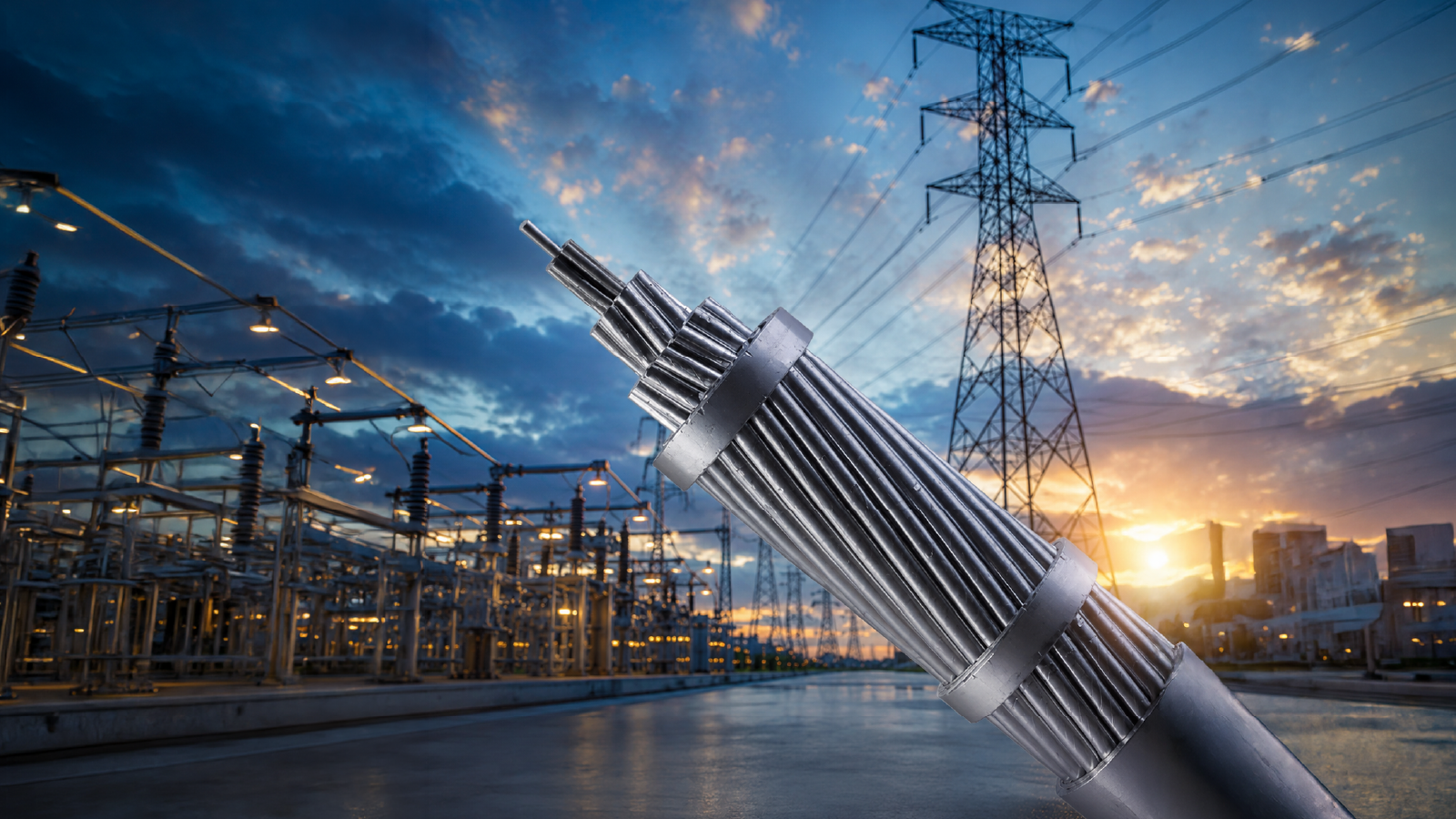
India's power sector is expanding at a pace that few countries can match. New transmission corridors, rural electrification drives, and industrial power demand are pushing utilities to look for conductors that combine strength with efficiency. Among the many options available today, Aluminium Conductor Steel Reinforced stands out as the most trusted choice for overhead power lines across the country.
This conductor type has powered Indian transmission networks for decades. It continues to remain relevant because it solves a simple but critical problem. Utilities need a conductor that carries electricity efficiently while surviving harsh weather, long spans, and heavy mechanical loads. This blog explains why this conductor matters, how it works, and what buyers should check before choosing a supplier.
The conductor uses a design that pairs two materials for two different jobs. Aluminium strands wrap around a steel core. Aluminium carries the electrical current. Steel provides the tensile strength needed to hold long spans without excessive sag.
This combination gives engineers flexibility. They can design longer spans between towers, which reduces the number of towers needed for a transmission line. Fewer towers mean lower project costs and faster installation timelines.
The strength-to-weight ratio also matters for river crossings and valley spans. Power lines often need to travel across difficult terrain where tower placement is limited. A conductor with a strong steel core handles this load without stretching or breaking under tension.
India is adding renewable energy capacity every year. Solar and wind projects are often located far from cities, which means power has to travel long distances before it reaches consumers. Long-distance transmission demands conductors that lose minimal energy and resist mechanical stress.
Rural electrification schemes add another layer of demand. Many villages still need new grid connections, and these projects often run through areas with extreme weather, from coastal humidity to desert heat. A conductor built for this range of conditions keeps maintenance costs low and service life long.
Railway electrification is expanding too. Indian Railways continues to convert diesel routes to electric traction, and this shift requires dependable overhead conductors that can handle continuous current flow along thousands of kilometres of track.
The steel core inside the conductor is what gives it mechanical strength. This strength allows utilities to space towers further apart, which reduces land acquisition and construction costs on large transmission projects.
The outer aluminium strands are responsible for carrying current. Pure aluminium offers low resistance, which means less energy loss as power moves across the grid. Lower resistance translates directly into better transmission efficiency and lower operating costs for utilities.
Sag is a major concern for transmission planners. Excessive sag can cause conductors to violate ground clearance rules or come too close to vegetation and structures. The steel core limits elongation under load, keeping sag within safe limits even during high current periods.
Galvanised steel resists rust, and the aluminium sheath handles UV exposure, moisture, and industrial pollution without significant degradation. This resistance matters in a country with monsoon seasons, coastal humidity, and industrial pollution belts.
Conductors need to perform reliably even during peak summer load or short-circuit conditions. A well-engineered conductor maintains stable performance at high operating temperatures and tolerates short-term thermal spikes without structural damage.
This conductor type serves multiple segments of the power sector. Its versatility is one reason it remains the default choice for so many projects across India.
● Urban and rural distribution networks that need dependable, low-maintenance conductors
● Long-span transmission crossings over rivers, valleys, and hilly terrain
● Railway electrification and tramway feeder lines
● Industrial power feeds where load requirements are steadily increasing
● Upgrades to older transmission lines that need higher current capacity
Each of these applications has different mechanical and electrical demands, which is why conductor sizing and stranding configuration matter so much during project planning.
Some buyers compare this conductor against all-aluminium alloy options or high-temperature low-sag conductors. The aluminium conductor with steel reinforcement design remains popular because it balances cost, strength, and conductivity better than most alternatives for standard transmission and distribution needs.
All-aluminium conductors work well for shorter spans with lighter mechanical loads. High-temperature conductors suit projects that need higher current-carrying capacity on existing towers. For most standard transmission corridors, however, the steel-reinforced design offers the most practical balance of performance and cost.
Choosing between these conductor types depends on span length, terrain, current requirements, and budget. Utilities should evaluate all these factors before finalising a conductor type for a specific project.
Reliable conductors follow recognised manufacturing standards. Buyers should confirm that their supplier manufactures conductors according to established specifications, including IS 398 Part 2 for galvanised steel core conductors, IEC 61089 for round-wire concentric-lay conductors, ASTM B232 for galvanised steel core specifications, and BS EN 50183 for European compliance requirements.
Adherence to these standards ensures consistent mechanical strength, accurate electrical resistance values, and long-term durability. Utilities and EPC contractors should always request test certificates and compliance documentation before procurement.
Selecting the right conductor supplier requires more than comparing prices. Transmission and distribution companies should evaluate a few critical factors before placing an order.
First, check the stranding configuration and wire diameter for both aluminium and steel layers. These details directly affect current-carrying capacity and mechanical strength.
Second, review the breaking load and resistance values listed in the technical datasheet. These numbers determine whether the conductor suits the specific span and load conditions of the project.
Third, confirm the supplier's manufacturing capacity and delivery timelines. Large transmission projects often require conductors in bulk, and delays in supply can push back entire project schedules.
Fourth, ask about available sizes. A good supplier offers a wide range, from smaller conductors for local distribution to heavy-duty options for high-voltage transmission lines up to 800 kV.
Conductor performance depends heavily on manufacturing quality. Inconsistent stranding, poor galvanising, or substandard aluminium purity can lead to premature failure, higher line losses, and costly maintenance down the line.
Prem Cables manufactures a full range of aluminium conductor steel reinforced solutions built for Indian grid conditions, backed by compliance with IS, IEC, ASTM, and BS EN standards. Utilities and EPC companies looking for dependable overhead conductors can review the complete ACSR conductor range for technical specifications and available sizes.
For projects requiring higher current capacity on existing towers, comparing this conductor against HTLS conductor solutions can help identify the best fit for specific transmission upgrades. Buyers evaluating lighter alternatives for shorter spans may also find it useful to explore AAAC conductor options before finalising their procurement decision. For further reading on conductor selection and grid planning, the Prem Cables blog section covers related topics on transmission infrastructure.
India's energy infrastructure is growing fast, and conductor selection plays a direct role in how efficiently that growth happens. A conductor that balances strength, conductivity, and weather resistance keeps transmission networks reliable for decades.
Utilities and EPC contractors planning new transmission lines or distribution upgrades should prioritise proven conductor standards, verified technical specifications, and suppliers with a strong manufacturing track record. Making the right choice today prevents costly line failures and maintenance issues in the future.
What is the main advantage of ACSR conductors over all-aluminium conductors?
The core difference lies in mechanical strength. ACSR conductors use a steel core that handles tension, allowing longer spans between towers. All-aluminium conductors lack this reinforcement, so they suit shorter spans with lighter mechanical loads. For long-distance transmission and river crossings, the steel-reinforced design offers better sag control and durability.
How long do ACSR conductors typically last on transmission lines?
With proper installation and standard maintenance, these conductors often serve for 30 to 40 years. Galvanised steel resists corrosion, and the aluminium outer layer withstands UV exposure and pollution. Actual lifespan depends on environmental conditions, load cycles, and adherence to manufacturing standards during production.
Which IS standard governs ACSR conductor manufacturing in India?
IS 398 Part 2 governs the manufacturing of ACSR conductors with a galvanised steel core for overhead power lines in India. This standard specifies stranding, wire diameter, mechanical strength, and testing requirements. Buyers should always confirm compliance with this standard before procurement.
Can ACSR conductors handle high voltage transmission above 400 kV?
Yes, larger ACSR conductor sizes, such as the Lapwing configuration, support voltage levels up to 800 kV. Sizing depends on current requirements, span length, and tower design. Utilities should consult technical datasheets to match conductor size with specific voltage and load requirements.
What factors affect the price of ACSR conductors?
Aluminium and steel raw material costs drive most of the price variation. Conductor size, stranding configuration, order quantity, and delivery timelines also influence final pricing. Buyers should request detailed quotations that specify technical parameters alongside cost to ensure accurate comparisons between suppliers.


