
.png)
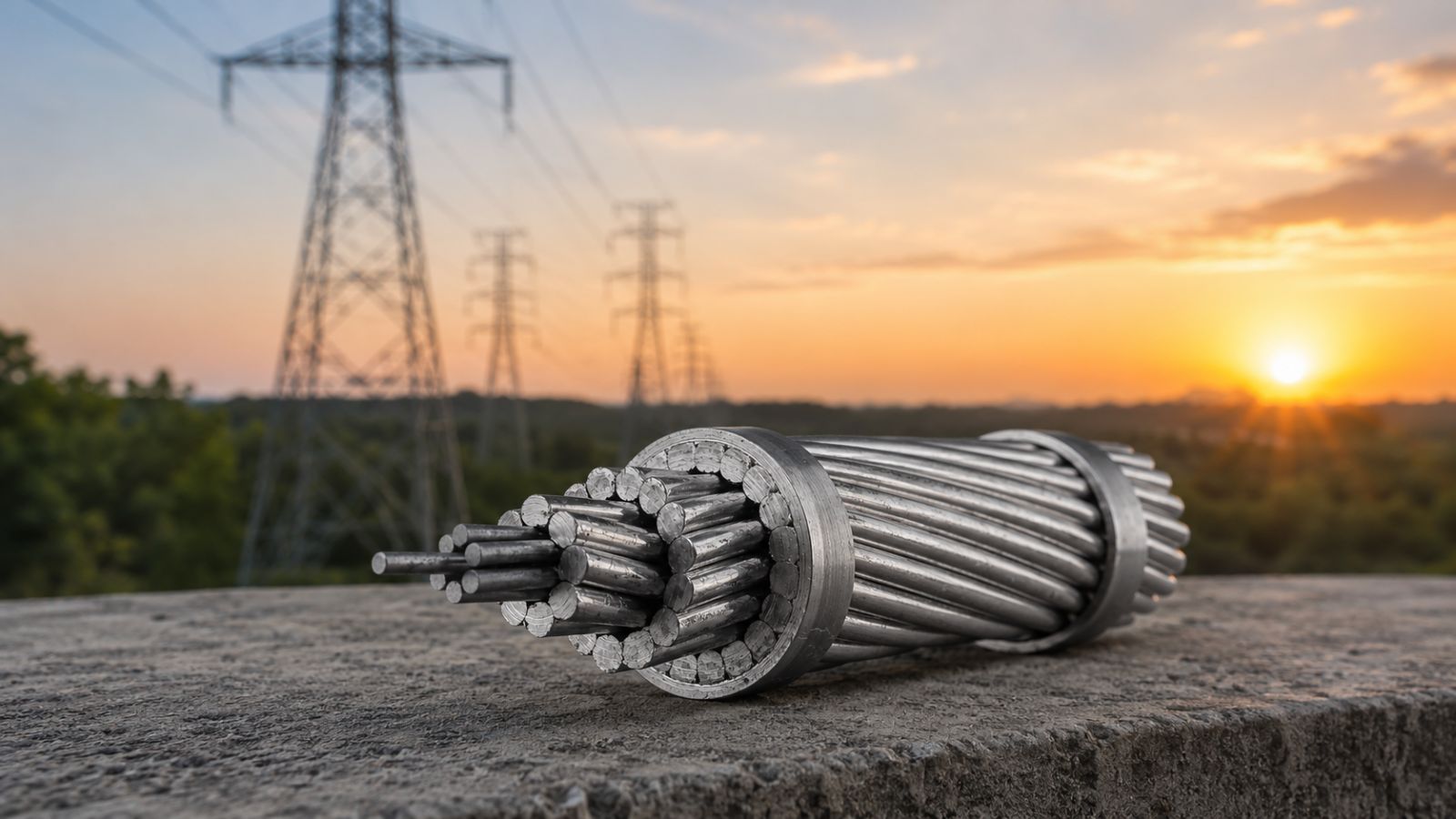
Building new transmission corridors takes years of planning, land acquisition, and regulatory approval. Utilities across India are increasingly turning to a faster alternative that works within existing infrastructure. Aluminium conductors reconductoring has become one of the most practical ways to boost grid capacity, since it allows utilities to replace old conductors on current towers instead of constructing entirely new lines. At Prem Cables, we manufacture aluminium conductors specifically suited for these upgrade projects, helping utilities modernize their networks faster and at lower cost.
This blog examines why reconductoring has become such a significant growth driver for aluminium conductor demand and how Prem Cables supports utilities through this transition.
India's power demand has grown steadily across residential, commercial, and industrial sectors. Many transmission corridors built decades ago now operate close to their maximum thermal limits, leaving little room for additional load growth. Building parallel lines to handle this extra demand requires new land, fresh approvals, and years of construction time that utilities often cannot afford.
Reconductoring overhead lines offers a faster path forward. Instead of constructing new corridors, utilities replace the existing conductor with a higher-capacity alternative on the same towers. This approach reuses existing right-of-way, foundations, and structural infrastructure, cutting both project timelines and costs significantly compared to greenfield construction.
Urban expansion has made this option even more attractive. As cities grow outward, available land near existing transmission corridors has become scarce or completely built over. In many cases, adding new towers simply is not feasible anymore, which pushes utilities toward reconductoring as the only practical solution for capacity expansion.
Ageing infrastructure carries its own set of risks beyond capacity limitations. Conductors installed thirty or forty years ago have often reached the end of their intended service life, making them more susceptible to faults, sagging, and mechanical failure. Conductor replacement projects address both capacity constraints and reliability concerns at the same time.
When utilities replace old conductors, they typically move to modern alloy options that offer improved strength and better thermal performance. This shift reduces the frequency of unplanned outages while also extending the operational lifespan of the transmission corridor. For utilities managing large service territories, this reliability improvement translates directly into fewer customer complaints and lower emergency repair costs.
Prem Cables supports these conductor replacement projects through a wide manufacturing range that includes AAAC, ACSR, and HTLS conductor options. Each conductor type addresses different reconductoring requirements, whether the priority is corrosion resistance, mechanical strength, or higher thermal capacity for congested corridors.
The core appeal of reconductoring lies in its ability to deliver upgrading transmission line capacity without the delays associated with new construction. Utilities can often double or significantly increase power transfer capability on an existing corridor simply by switching to a conductor with better electrical and thermal properties.
This becomes particularly relevant for corridors feeding renewable energy projects. Solar and wind installations frequently connect to older sub-transmission lines that were never designed for the additional load these projects introduce. Rather than waiting years for new evacuation infrastructure, utilities can reconductor existing lines to accommodate this growing renewable capacity much faster.
Prem Cables manufactures AAAC conductors that work particularly well for reconductoring programs, since their steel-free construction eliminates the corrosion failure mode common in ageing ACSR lines. For corridors requiring even higher thermal performance, our HTLS conductor range supports uprating projects where utilities need maximum capacity gains without any tower modification.
Cost considerations play a major role in why utilities favor reconductoring over new line construction. Building a new transmission corridor involves land acquisition costs, environmental clearances, and extensive construction labor that can stretch project budgets well beyond initial estimates. Reconductoring bypasses most of these expenses since it works within infrastructure that already exists.
Material efficiency also contributes to this cost advantage. Since reconductoring reuses existing towers and foundations, project teams need fewer raw materials overall compared to building parallel lines from scratch. This efficiency becomes increasingly important as utilities balance rising infrastructure demands against limited capital budgets.
Prem Cables has manufactured aluminium conductors since 1964, giving us deep experience in supporting utilities through exactly these kinds of upgrade cycles. Our facility in Pipalia Kalan, Rajasthan, produces conductors compliant with IS, BS, and IEC standards, ensuring reconductoring projects meet the same quality benchmarks required for new construction tenders.
Selecting the right conductor for a reconductoring project requires careful evaluation of the existing tower's structural limits. Since older towers were designed around the weight and tension characteristics of their original conductors, project engineers must choose replacement conductors that fit within these mechanical constraints while still delivering meaningful capacity improvements.
Prem Cables works closely with utility engineers and EPC contractors to identify suitable conductor options for each specific corridor. Our technical team reviews tower conditions, span lengths, and thermal requirements before recommending whether AAAC, ACSR, or HTLS conductors best fit a given reconductoring project.
Quality assurance remains central throughout our manufacturing process. Every conductor batch undergoes testing for tensile strength and conductivity before leaving our facility, ensuring consistent performance across large-scale reconductoring orders that may span hundreds of kilometers of transmission corridor. For utilities exploring standard replacement options, our ACSR conductor page outlines specifications commonly used in conventional reconductoring programs.
As India's grid continues aging while demand keeps rising, reconductoring will remain one of the fastest ways for utilities to expand capacity without waiting years for new corridor approvals. Utilities and contractors planning their next upgrade cycle can connect with our technical team to discuss conductor specifications suited to their specific reconductoring requirements.
Reconductoring has moved from being a niche solution to a mainstream strategy for grid modernization across India. With the right aluminium conductor selection, utilities can extract significantly more value from infrastructure that already exists, and Prem Cables remains ready to support that transition at every stage.
Aluminium conductors offer a strong balance of conductivity, strength, and cost efficiency, making them ideal for aluminium conductors reconductoring projects that need improved capacity without new infrastructure.
Reconductoring overhead lines involves replacing existing conductors with higher-capacity alternatives on the same towers, allowing utilities to boost grid capacity faster than building new transmission corridors.
Prem Cables offers AAAC, ACSR, and HTLS conductors for conductor replacement projects, with the right choice depending on tower conditions, thermal requirements, and corrosion exposure.
Yes. Upgrading transmission line capacity through reconductoring reuses existing towers and foundations, allowing utilities to expand capacity without land acquisition or new construction.
Prem Cables tests every conductor batch for tensile strength and conductivity, ensuring reliable performance across large-scale aluminium conductors reconductoring programs.
Yes. Reconductoring typically costs less than new construction since it avoids land acquisition, environmental clearances, and extensive foundation work required for greenfield projects.
Yes. AAAC conductors are commonly used to replace ageing ACSR conductors during reconductoring, since their steel-free construction removes the corrosion risk associated with older steel-core designs.
Utilities and EPC contractors can contact the Prem Cables team directly through the company website to discuss conductor specifications and bulk order requirements for reconductoring projects.


