
.png)
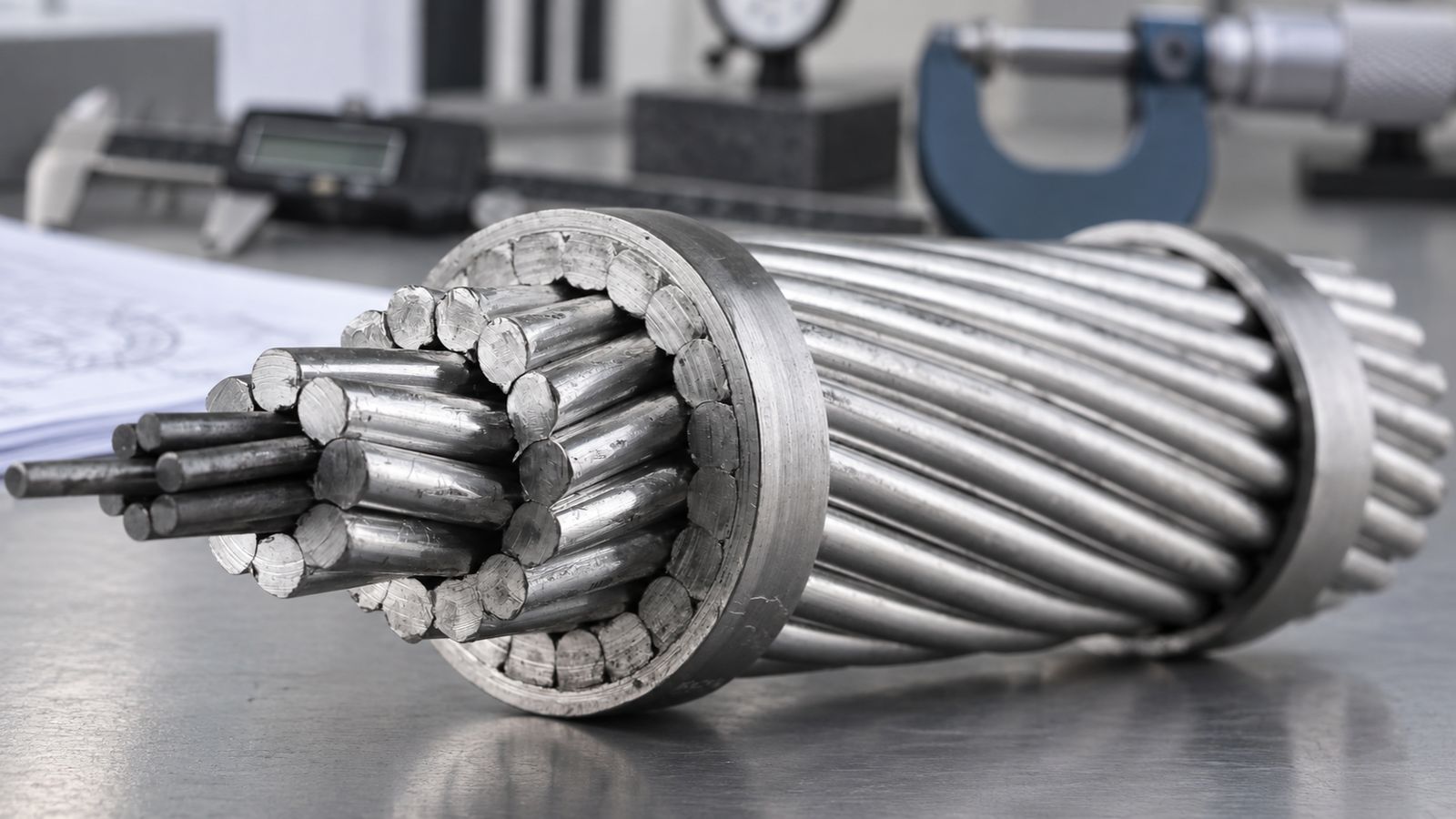
Two conductors can share the same stranding, the same diameter and almost the same weight, yet behave very differently on a line. The difference usually sits in the standard they were made to. For procurement teams, aluminium conductor standards are the fastest way to lock in material, resistance, strength and testing before an order is placed. This guide explains what those standards control, which ones apply to each conductor type, and how buyers can check that a supplier has met them.
It helps to think of a conductor standard as a set of answers to five buyer questions.
Standards fix the wire material and temper. For example, AAC uses hard-drawn EC-grade aluminium (1350-H19 temper, per Prem Cables’ AAC data). AAAC uses a heat-treated aluminium alloy such as 6201-T81. AL59 uses a high-conductivity Al-Mg-Si alloy. Each material comes with its own minimum conductivity and tensile limits.
The standard lists wire diameters, the number of wires, the stranding pattern and permitted tolerances. It also sets the lay ratio, which controls how tightly each layer twists. IS 398 Part 1:1996, for instance, sets a lay ratio range of 10 to 14 for seven-wire conductors.
Every standard sets a maximum DC resistance at 20 °C. This single number drives line losses and current rating. Buyers should compare this value, not just the conductor area.
The standard sets a minimum breaking load for individual wires and a calculated breaking load for the finished conductor. Line designers use these values to set stringing tension and check tower loads.
Standards define the tests, how many samples to take and what counts as a pass. This is the part buyers most often overlook.
Take IS 398 Part 1:1996 as a worked example. It lists these tests on aluminium wires and the finished conductor:
The same standard sets rules that buyers rarely read but should. It requires wires drawn in continuous lengths without joints, except joints made in the rod or before drawing. It bars joints during stranding in seven-wire conductors. And it calls for samples from the outer ends of at least 10% of spools before stranding.
These rules tell a buyer what “compliant” means in practice. They also show why a supplier’s sampling plan and joint records deserve a look.
A certificate on its own is not proof. Here is a practical verification routine.
If you want a closer look at how alloy conductor quality is built in during production, the Prem Cables article on AAAC manufacturing quality walks through the process side.
A test certificate can look like a wall of numbers. A quick, structured read catches most problems.
Start with identity. Check that the certificate names the same conductor type, size, stranding and standard part as your purchase order. Then confirm the drum or lot numbers match the drums you received.
Check the limits column. Each measured value should sit next to the limit from the standard. If the certificate shows results without limits, ask for them.
Look at resistance first. Measured resistance should fall below the maximum allowed at 20 °C. If the test ran at a different temperature, the certificate should show the correction.
Then check strength and dimensions. Wire breaking loads should meet the minimum. Wire diameters and the overall diameter should sit inside tolerance.
Finally, check the signatures and dates. A certificate dated long before the production date of your drums deserves a question.
This five-minute review will not replace witness testing on large orders. It does help a buyer spot mismatched paperwork before the drums reach the site.
Prem Cables states that it manufactures conductors in compliance with IS, BS, IEC, SS and ASTM standards, under ISO 9001:2015-certified processes, with an in-house testing laboratory. Each product page lists the standards that apply to that conductor, along with size-wise technical data. Buyers can compare the AAAC range and the AL59 range using the same parameters, alongside the AAC and ACSR pages on the same site.
Aluminium conductor standards protect both sides of a contract. They give the buyer measurable guarantees and give the manufacturer a clear target. The most useful habit is simple: name the exact standard part, compare maximum resistance and breaking load, and ask to see the test evidence behind every lot.
Need help matching a tender specification to the right conductor? Send your specification to Prem Cables for a technical review and supporting documentation.
IS 398 is the Indian standard series for aluminium conductors for overhead transmission. Each part covers a conductor type, such as AAC, ACSR, AAAC or high-conductivity alloy.
IS 398 Part 6 covers high-conductivity aluminium alloy stranded conductors. The CEA refers to AL59 under this part.
Part 1 covers all aluminium stranded conductors (AAC). Part 2 covers aluminium conductors with a galvanised steel core (ACSR).
ASTM B399 covers concentric-lay stranded aluminium alloy 6201-T81 conductors, commonly referred to as AAAC.
Ask for wire diameter, wire breaking load, wrapping, resistance and lay ratio results, plus type test reports and lot-wise certificates.
It sets the conductor’s losses and affects its current rating. Two conductors of equal area can have quite different resistance values.
No. ISO 9001:2015 shows a quality management system. Product compliance still needs test certificates against the named conductor standard.
Yes. IEC 62641:2022 replaced IEC 60889, IEC 60104, IEC 60121 and IEC 62004 for aluminium and alloy conductor wires.


