
.png)
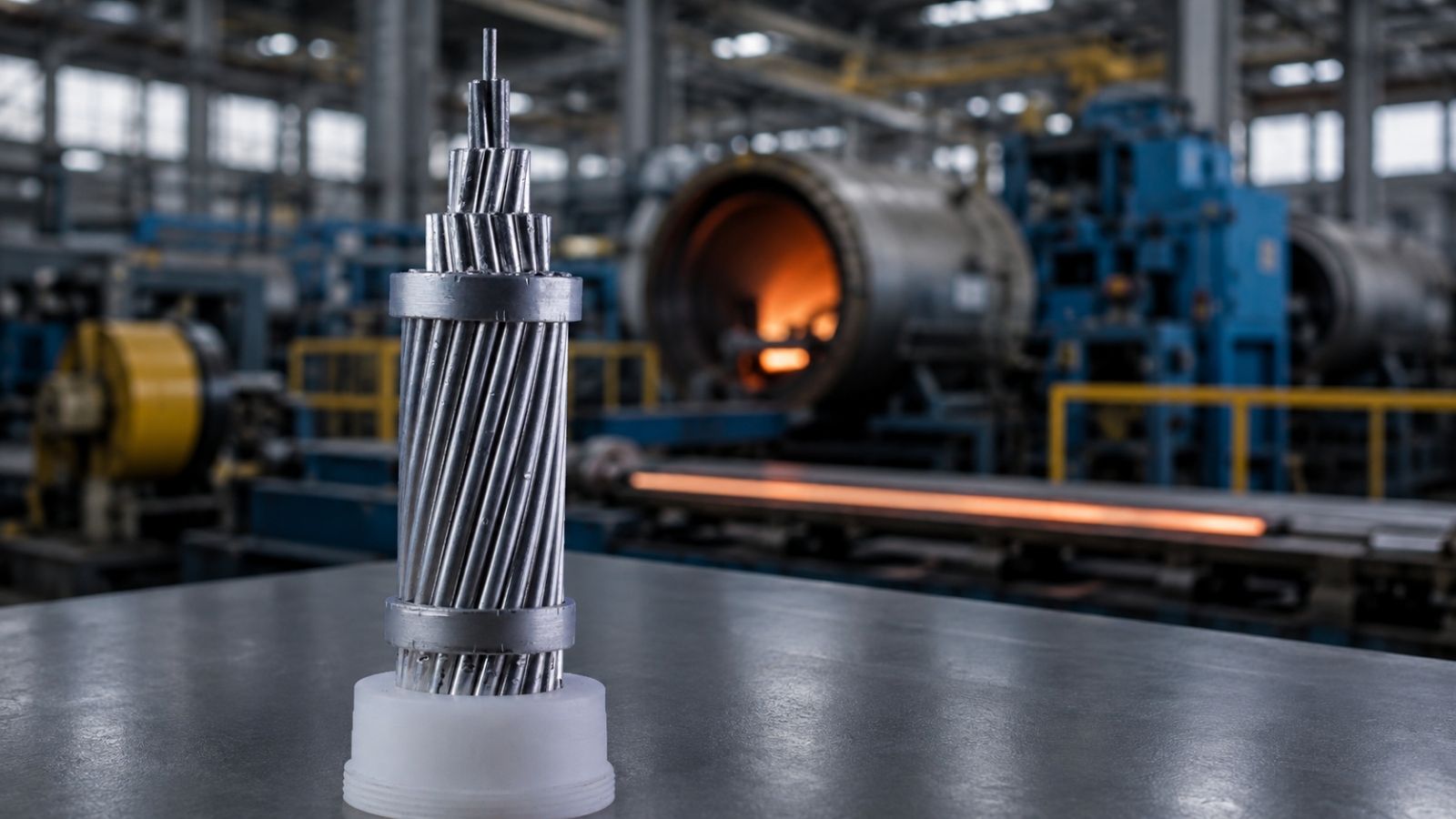
Behind every reliable transmission line lies a manufacturing process that most engineers never see firsthand. The conductor hanging between towers looks simple from a distance, yet producing it involves precise metallurgical control from the very first stage. The AL 59 alloy conductor manufacturing process demands even greater attention to detail than standard aluminium conductors, since the alloy composition must be carefully balanced to deliver both strength and conductivity. At Prem Cables, we manage every stage of this process in-house, ensuring each AL 59 conductor meets the exacting standards utilities expect across projects in India and international markets alike.
This blog walks through how AL 59 alloy conductors are manufactured and why Prem Cables has built a reputation for consistency in this specialized conductor category.
AL 59 conductors get their distinctive properties from a specific alloy composition combining aluminium with controlled amounts of magnesium and silicon. This aluminium magnesium silicon alloy conductor formula is what allows AL 59 to achieve roughly 59% IACS conductivity while offering meaningfully higher tensile strength compared to standard EC grade aluminium.
Getting this alloy ratio right requires careful control during the melting stage. Too much magnesium or silicon can compromise conductivity, while too little reduces the mechanical strength that makes AL 59 valuable for demanding applications like long spans and coastal installations. Manufacturers must therefore maintain tight compositional tolerances throughout every production batch.
Prem Cables begins this process with high-purity aluminium ingots, carefully alloyed with precise magnesium and silicon additions before casting begins. This early-stage precision sets the foundation for every downstream property the finished conductor will exhibit, from its electrical performance to its resistance against corrosion in humid or coastal environments.
Once the alloy composition is finalized, the AL59 conductor production process moves into continuous casting. Molten alloy flows through a casting wheel and belt system, solidifying into a continuous bar that feeds directly into rolling equipment without interruption. This continuous method helps maintain uniform grain structure throughout the material, which supports consistent mechanical and electrical properties across the entire production run.
After casting, the bar passes through a rolling mill that gradually reduces its diameter into a finished wire rod. Temperature control during this rolling stage matters significantly for AL 59 alloy, since improper heat management can affect how the magnesium and silicon distribute within the aluminium matrix, potentially creating inconsistencies in the final product.
Prem Cables operates this casting and rolling process at our integrated facility in Pipalia Kalan, Rajasthan, allowing tight coordination between each production stage. This integration reduces the handling and transportation steps common when different companies handle rod production and conductor stranding separately, which in turn reduces the risk of contamination or quality drift between stages.
Certain alloy conductor grades pass through additional forming and heat treatment stages that refine their final mechanical properties. While primary rod production for AL 59 relies mainly on continuous casting and rolling, some alloy shaping techniques associated with the broader alloy conductor extrusion process help achieve the specific strand profiles used in higher-performance conductor designs.
Heat treatment plays a particularly important role at this stage. Controlled heating and cooling cycles allow the alloy's internal structure to stabilize, improving tensile strength without compromising the conductivity achieved during casting. This step distinguishes AL 59 production from simpler aluminium conductor manufacturing, since the heat treatment schedule must be precisely calibrated to the specific magnesium-silicon ratio used in each batch.
Prem Cables validates this stage through in-house metallurgical testing, checking that hardness and tensile properties fall within expected ranges before the rod moves forward into wire drawing and final stranding.
After rod production and heat treatment, the material enters the wire drawing stage, where it gets pulled through a series of progressively smaller dies to achieve the exact wire diameter required for the final conductor design. This drawing process must proceed gradually, since pulling the alloy too quickly through dies can introduce stress fractures that weaken the finished wire.
Once individual wires reach their target diameter, they move into stranding machines that twist multiple wires together into the final conductor configuration. Strand count and lay length are carefully controlled during this stage, since these factors directly affect the conductor's flexibility, tensile strength, and overall performance under mechanical load.
Prem Cables performs final quality verification at this stage, testing completed conductor samples for conductivity, tensile strength, and dimensional accuracy before any batch receives approval for dispatch. This end-to-end testing approach ensures that quality control extends beyond just the raw material stage into the fully assembled conductor product.
Utilities and EPC contractors purchasing AL 59 conductors, whether for domestic Indian transmission projects or international infrastructure work across markets like the United States and the Gulf region, rely heavily on manufacturing consistency. A single project may require a conductor spanning hundreds of kilometers, and any variation in alloy composition or mechanical properties across that length creates performance risk for the entire installation.
Growing infrastructure investment across Middle Eastern markets, including construction-heavy hubs like Dubai, has increased demand for alloy conductors that can withstand both high temperatures and coastal humidity. Prem Cables manufactures AL 59 conductors compliant with IS 398 and related international standards, giving buyers confidence that our production process meets recognized quality benchmarks regardless of the destination market.
For utilities exploring related conductor options, our AL 59 conductor specifications page provides complete technical details for evaluating this alloy against project requirements. Buyers comparing conventional steel-reinforced alternatives can also review our ACSR conductor range, which offers a different strength approach for projects where alloy conductors may not be the optimal fit.
As global transmission infrastructure continues expanding across challenging environmental conditions, from coastal humidity to extreme heat, demand for precisely manufactured alloy conductors like AL 59 will keep growing. Utilities and contractors evaluating their next conductor order can connect with our technical team to discuss AL 59 specifications suited to their specific project needs.
Manufacturing an AL 59 conductor correctly requires discipline at every single production stage, from alloy composition through final stranding. Through this carefully controlled AL 59 alloy conductor manufacturing process, Prem Cables continues delivering conductors that utilities around the world can depend on for decades of reliable service.
The AL 59 alloy conductor manufacturing process requires precise control of magnesium and silicon content during alloying, along with careful heat treatment. Prem Cables manages every stage in-house to maintain this precision.
An aluminium magnesium silicon alloy conductor combines aluminium with controlled amounts of magnesium and silicon, giving it higher tensile strength than standard EC grade aluminium while maintaining good conductivity.
Prem Cables tests alloy composition, conductivity, and tensile strength at multiple stages during the AL59 conductor production process, from casting through final stranding.
Certain shaping and heat treatment stages associated with the alloy conductor extrusion process help refine the mechanical properties of AL 59 conductors, improving strength without reducing conductivity.
Prem Cables manufactures AL 59 conductors with approximately 59% IACS conductivity, balancing strong electrical performance with improved tensile strength.
Yes. Prem Cables supplies AL 59 conductors to markets across Asia, Africa, and the Middle East, manufactured in compliance with IS 398 and related international standards.
Controlled heating and cooling during the AL 59 alloy conductor manufacturing process stabilizes the alloy's internal structure, improving tensile strength while preserving conductivity levels.
Utilities and EPC contractors can contact the Prem Cables team directly through the company website to request detailed AL 59 conductor specifications and project-specific quotes.


